


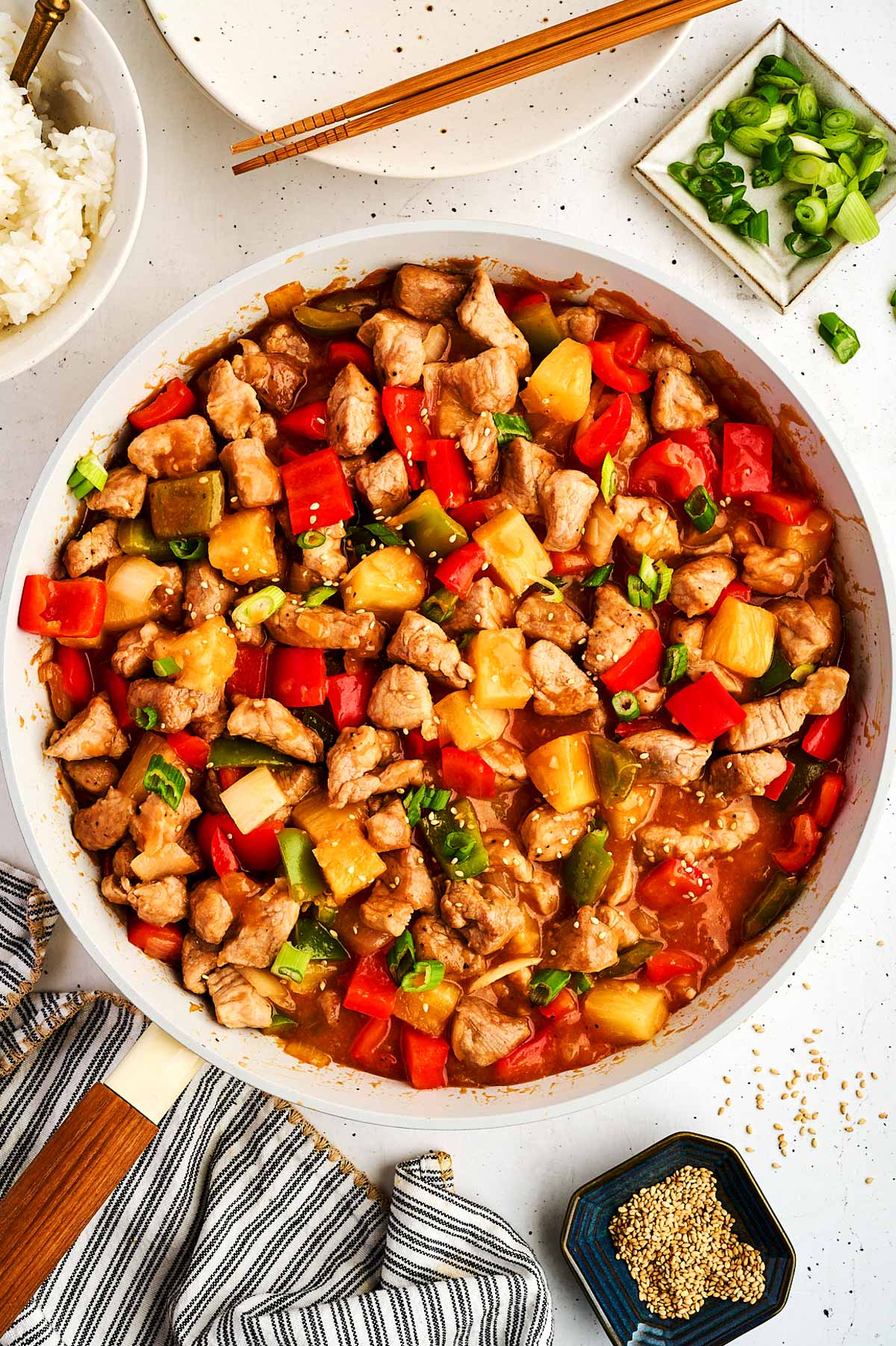
This is the sweet and sour pork I make when I want the flavor of my favorite childhood takeout, but none of the deep-frying that comes with it. It’s bright, vegetable-forward, and uses a few smart techniques to keep the pork tender and the sauce restaurant-quality.
Why this sweet and sour recipe works
- Prepping the pork: By tossing the pork in cornstarch, salt and pepper before searing, we get a lovely, light crust and tenderized meat without the mess of battering or frying; and make sure the pork won’t be bland.
- The “Winning Team” sauce: We are keeping it classic. Ketchup, pineapple juice, brown sugar, and a splash of vinegar. It’s nostalgic, reliable, and perfectly balanced.
- Maximum fruit-to-meat ratio: I’m a firm believer that the pineapple is the star. We use a full 20-oz can so you aren’t hunting for fruit in every bite.
We’re taking a classic and making it work for a busy home kitchen. It’s a larger-than-average batch, because you better prepare for leftover envy with this one.
Quick recipe rundown: Toss the cut up pork with cornstarch, assemble the sauce, then brown the pork. Set aside in a bowl and sauté the vegetables in the same skillet. Add the pork back in, along with the sauce and pineapple. Simmer covered until glossy and slightly caramelized around the edges. Serve on a pile of fluffy rice.
Key ingredients & swaps
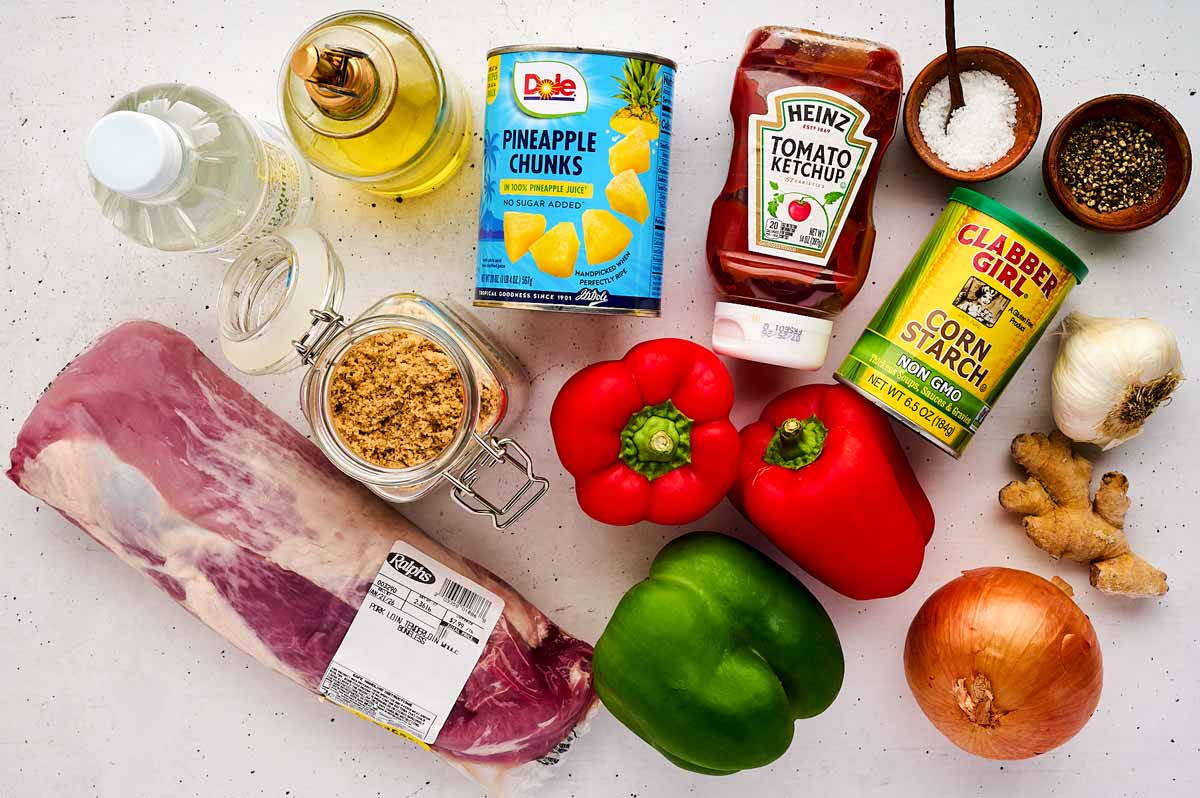
- Pork Tenderloin: This is the secret to keeping it light. It’s incredibly lean and only needs a short cook time. If you have pork loin or loin chops, they also work – you may need to sear them a touch longer.
- The Onion Trick: I chop half the onion small (so it melts into the sauce) and half in a larger dice for texture. It’s a small detail that makes the sauce taste “all day” savory.
- Fresh Ginger & Garlic: These are my non-negotiables. If you’re in a pinch, dried works, but fresh provides that “zing” that makes the dish feel vibrant.
- Pineapple Juice: Make sure to reserve the juice from your can! It’s the base of our sauce and provides that bright acidity and fruity sweetness.
Important recipe steps
Step 1
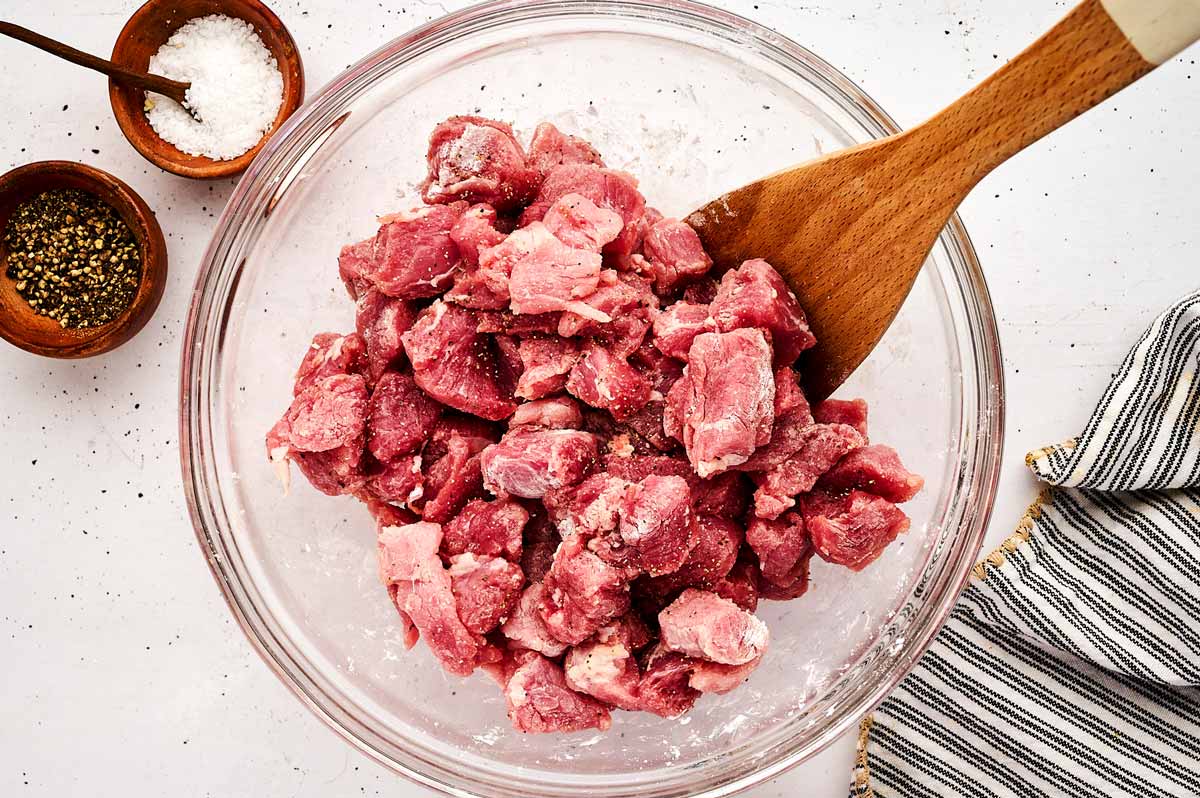
The cornstarch coat.
Tossing the pork in cornstarch first isn’t just for crisping; it actually tenderizes the meat while you prep the veggies.
Step 2
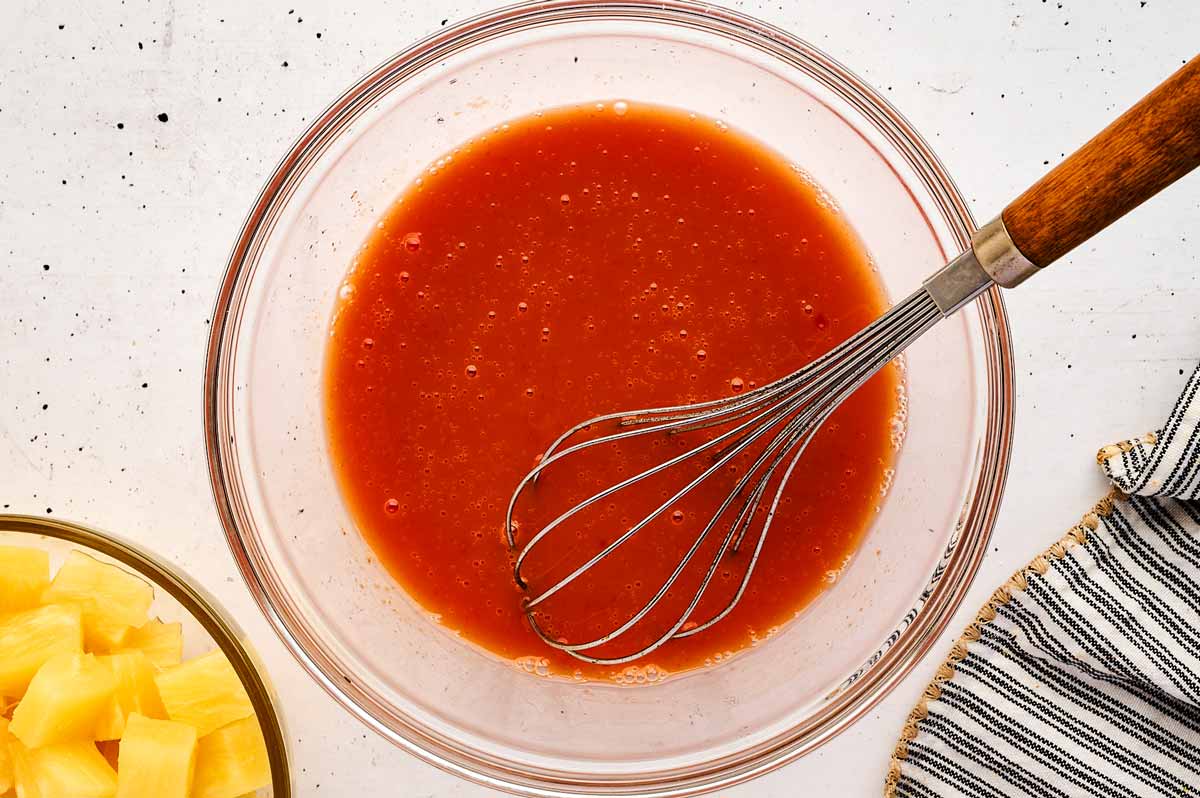
Sweet and sour sauce assembly.
Just whisk and set aside! We prep it now so it’s ready when we need it later.
Step 3
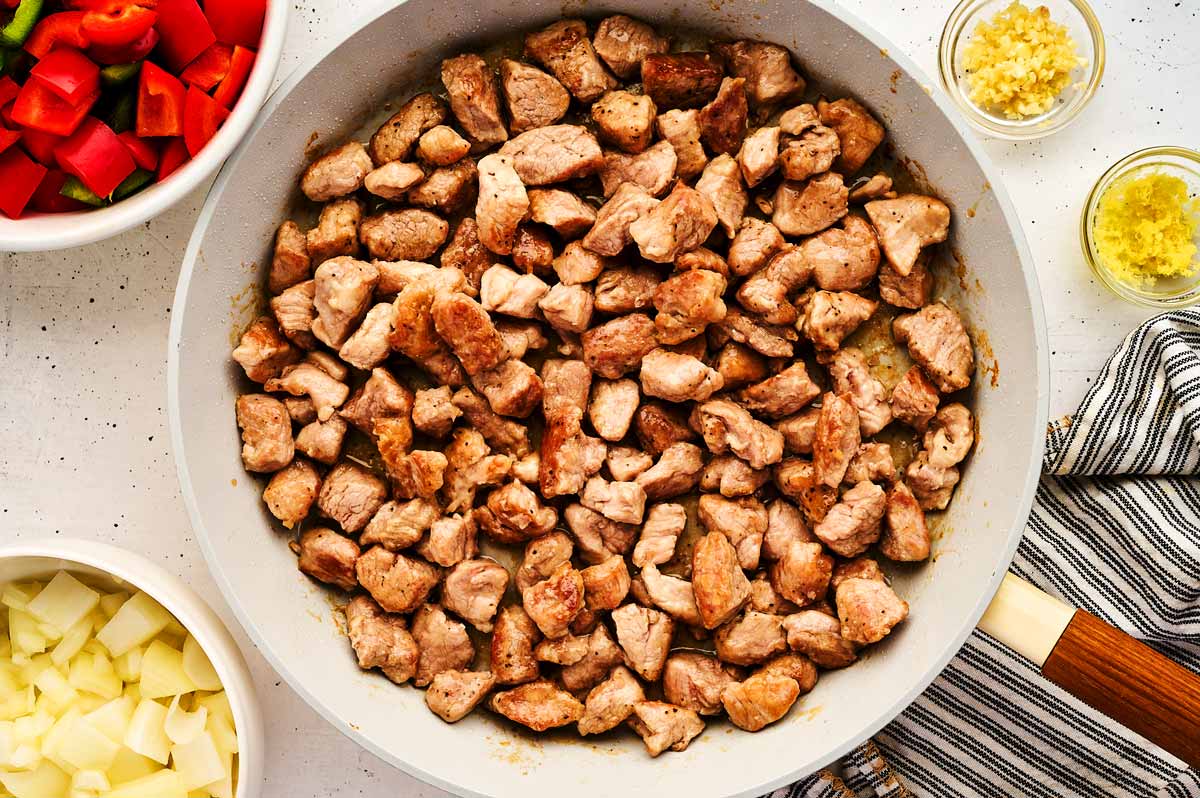
Brown the pork.
Sear the pork – you may need to do this in batches for the best results. Don’t overcook it here, or it will be dry.
Step 4
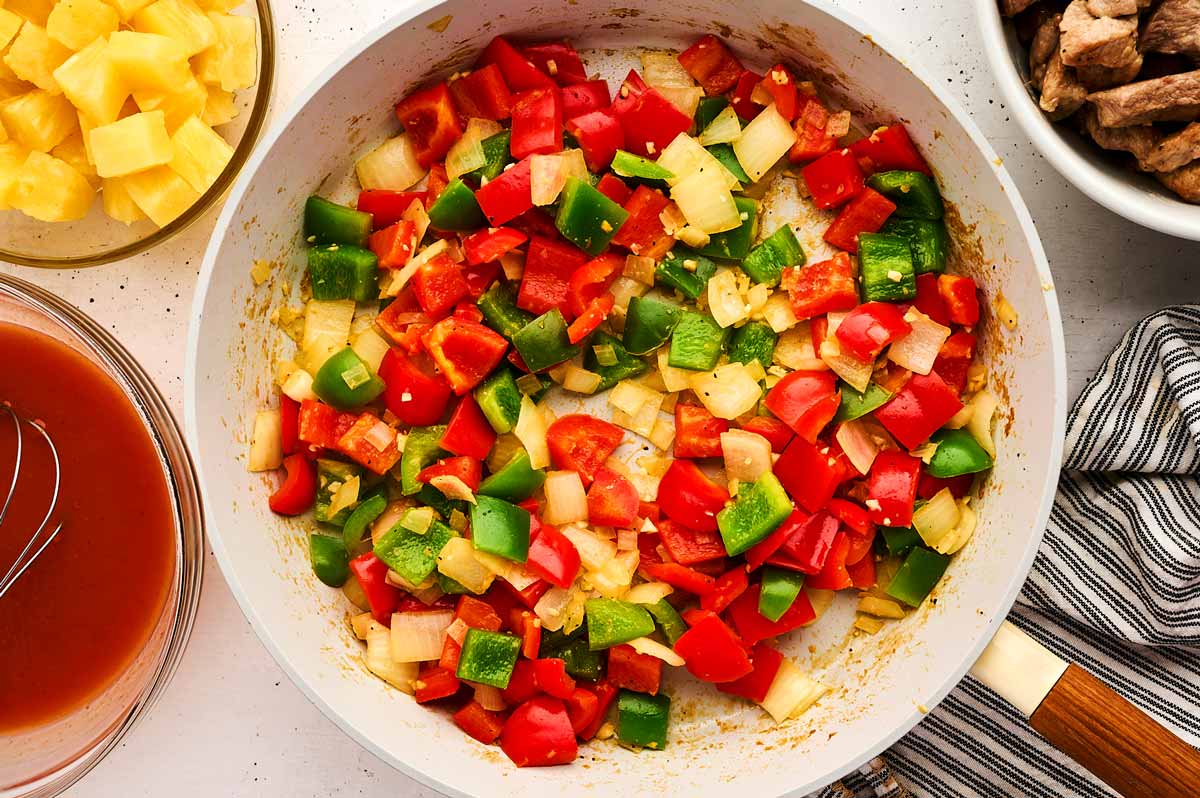
Sauté the vegetables.
Just stir-fry away. Keep it longer or shorter depending on how crisp you want the vegetables to stay.
Step 5
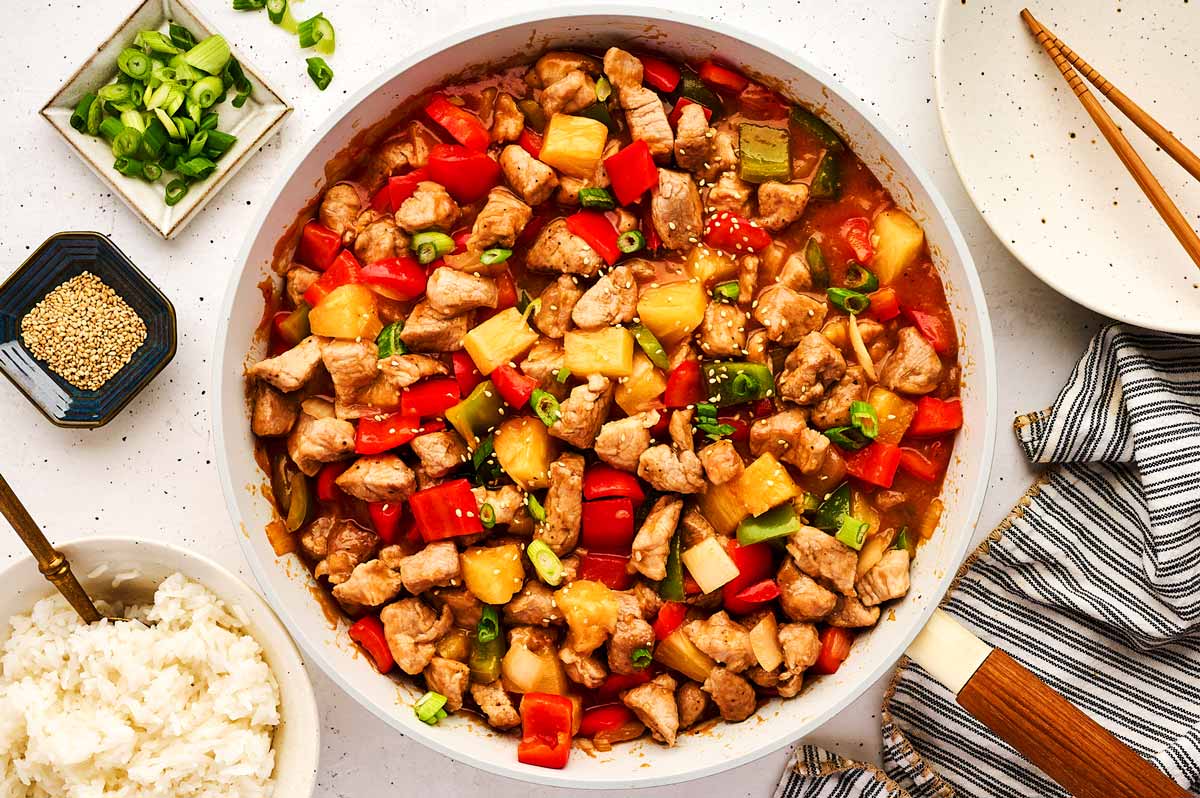
Put it all together.
Put the pork back into the skillet with the pineapple and the sauce. Simmer covered (sounds weird, but it’s key!) until it’s done to your liking.
Step 6
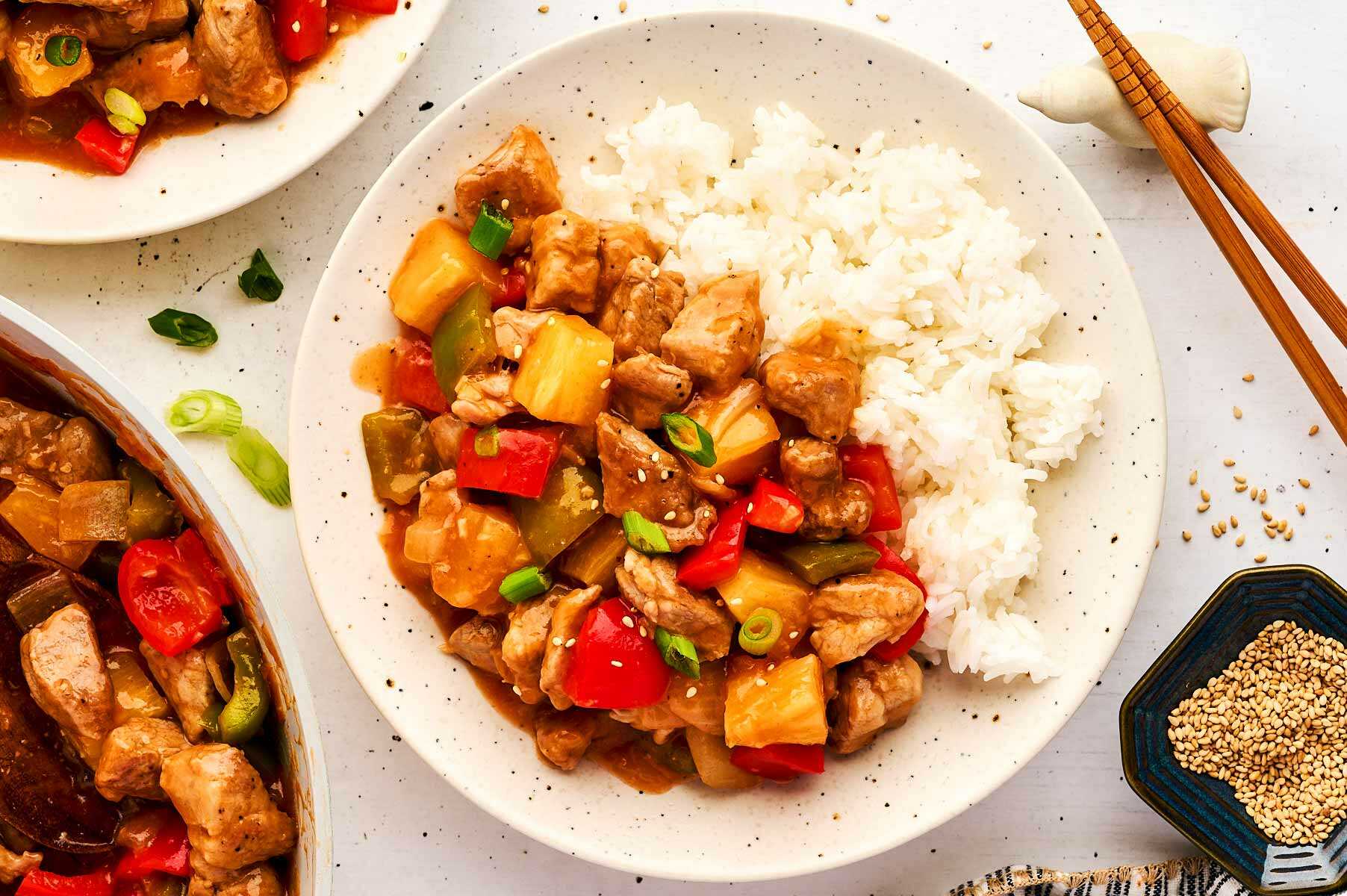
Pile up in a bowl.
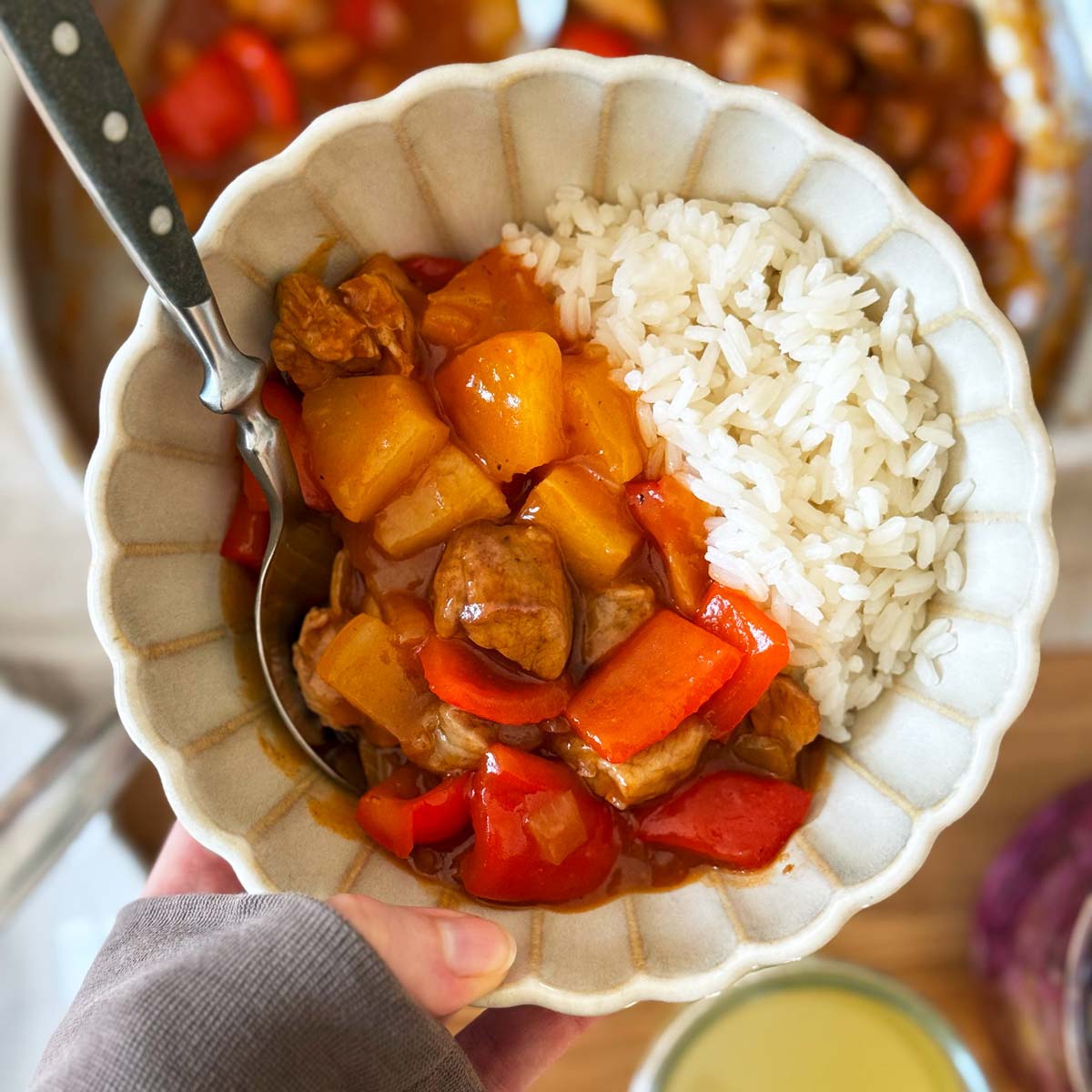
Rice – sweet and sour pork – extra pineapple fished from the pan – green onions and sesame if you’re feeling it.
Success tips
- The Two-Size Dice. Notice the different onion sizes. The smaller bits create a thick, savory base while the large squares stay crisp.
- Simmer the sauce long enough: The sauce tastes a little acidic and “funny” before it reduces. Let it simmer until it starts to caramelize around the edges of the pan — that’s when it’s ready.
- Watch out for splatters: Pork tenderloin is lean, so when it hits the hot oil, it can be a bit dramatic. Use a splatter screen if you have one!
- Adjust to your pineapple: If you buy pineapple in syrup, use less brown sugar. If you’re using natural juice, use the recipe as written for the perfect balance.
- Choose your vegetable firmness: We prefer our peppers fully softened (about 8 minutes simmering in the sauce), but if you like them with a bite, pull them off the heat earlier.
It’s balanced, faster than delivery, and makes enough to satisfy the whole family. The full recipe is just below — get the rice started now!
Common troubleshooting (FAQs)
If the sauce tastes “off,” it simply hasn’t simmered long enough. The cornstarch needs heat to lose its chalky texture, and the vinegar needs time to mellow. Give it the full 6–10 minutes!
If it tastes unbalanced after simmering, adjust it with salt, vinegar or brown sugar.
Absolutely. Boneless, skinless chicken thighs are a great swap. Just follow the same cornstarch coating method for that same tender texture.
You can use ¼ teaspoon of ground ginger. It’s still delicious, though you’ll miss that fresh “zing” that makes the dish pop. If you have the choice, go fresh!
This keeps beautifully in the fridge for up to 4 days. Reheat in a skillet with a tiny splash of water to loosen the sauce back up. It’s even better the next day once the flavors have truly married.











Joan says
My family loved this!
Lydia says
Thank you for sharing this recipe