

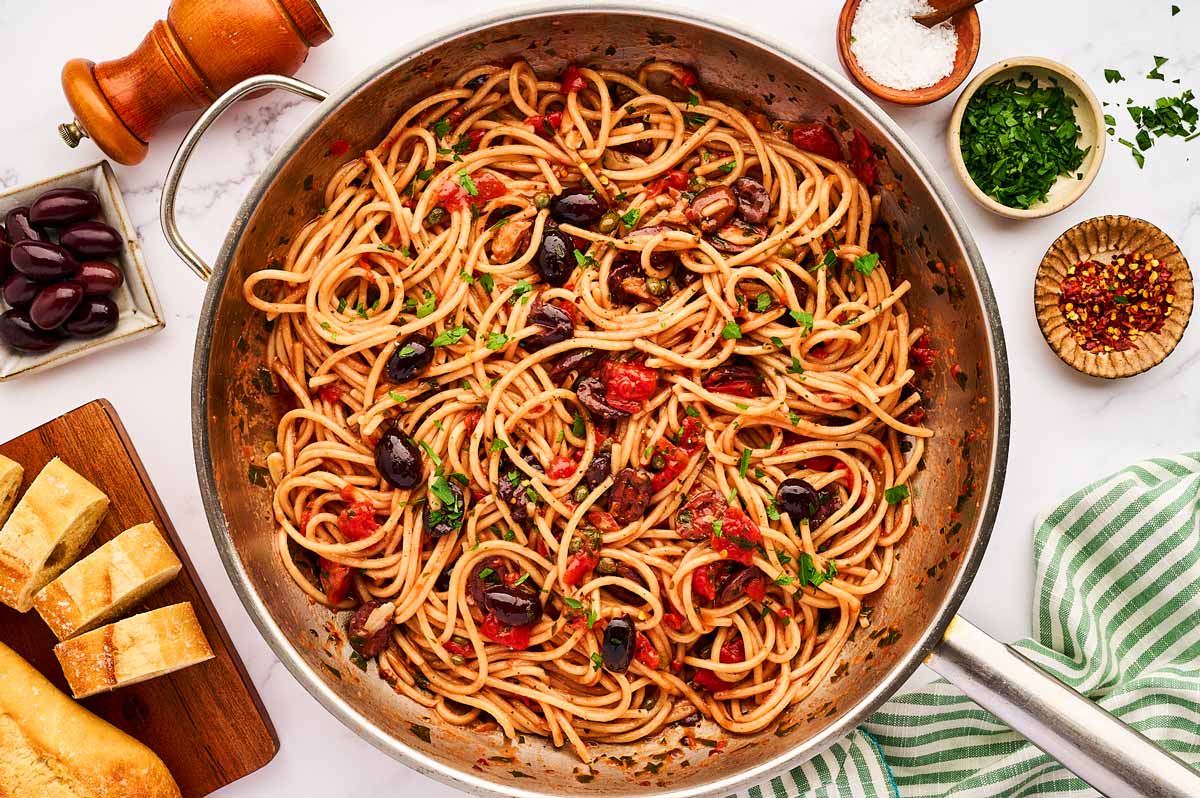
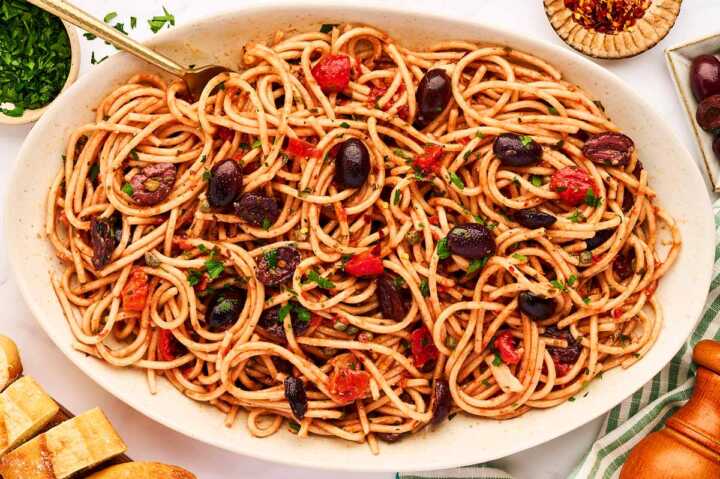
This Pasta Puttanesca is the ultimate “pantry powerhouse” meal — a bold, briny, and unapologetically savory Italian classic that tastes like it came from a seaside trattoria. Built on a foundation of garlic, olives, capers, and tomatoes, this 30-minute recipe transforms basic shelf staples into a sophisticated dinner with a “glossy, clingy” sauce that rivals any restaurant.
📸 Recipe Snapshot
- Prep Time: 5 Minutes
- Cook Time: 15 Minutes
- Dietary: Dairy-Free, Pescatarian (Omit anchovies for Vegan)
- Key Tool: Large skillet (Avoid deep pots; you need surface area for the sauce to emulsify)
⚠️ Crucial: You must reserve your pasta water! That starchy liquid is the only thing standing between a “watery” tomato sauce and a professional, glossy finish.
Pasta Puttanesca Recipe
Ingredients
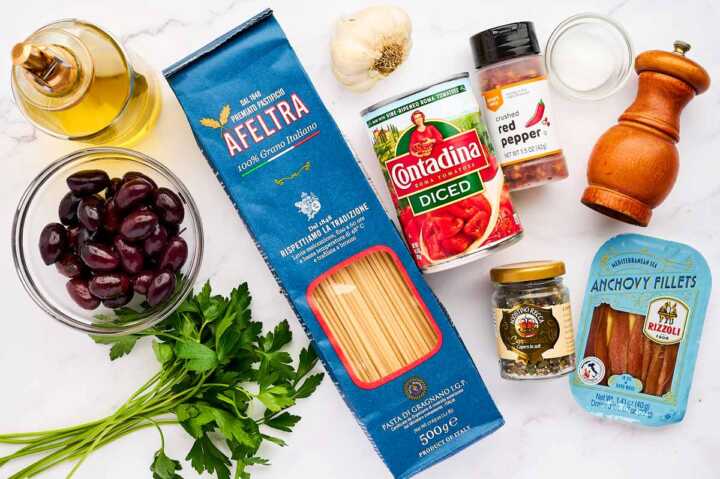
- 12 oz spaghetti (high-quality bronze cut is extra-delicious here because the recipe is so simple, but regular spaghetti work perfectly fine)
- salt
- 5 tablespoons olive oil
- 4 cloves garlic (crushed)
- red pepper flakes (optional)
- 4 canned anchovies (optional (but very much recommended!))
- 5 oz black olives (halved lengthwise and pitted (I usually try to buy unpitted fresh/deli olives, Italian if available or else Kalamata for the best flavor))
- 2 heaping tablespoons small capers (in salt preferred (rinse well!, but in brine works in a pinch))
- 1 (14.5-oz) can diced tomatoes (not drained (the better the quality, the tastier the dish!))
- ½ cup packed fresh parsley (finely chopped)
- cracked black pepper (to taste)
Instructions
- Prep:You need a wide skillet for this recipe to provide accurate surface area.Get your ingredients ready.

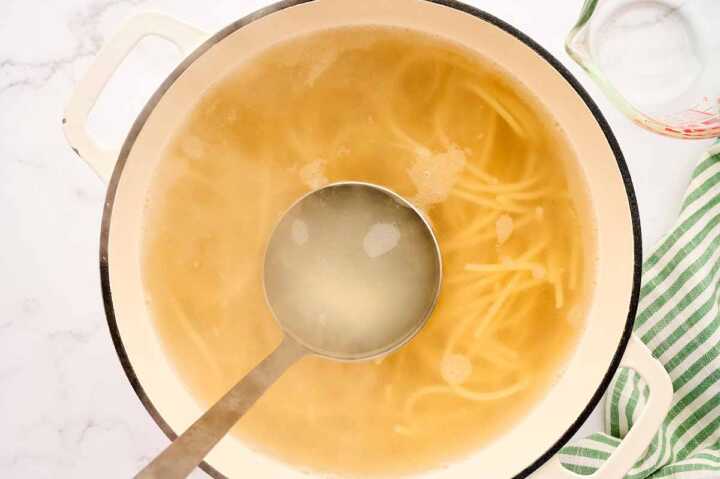
- Pasta water: Before you begin, start boiling a large pot of water for the pasta. Once the pasta water is boiling, salt generously and cook the spaghetti until JUST al-dente. Drain, reserving a cup of pasta cooking water, and set aside.12 oz spaghetti, salt
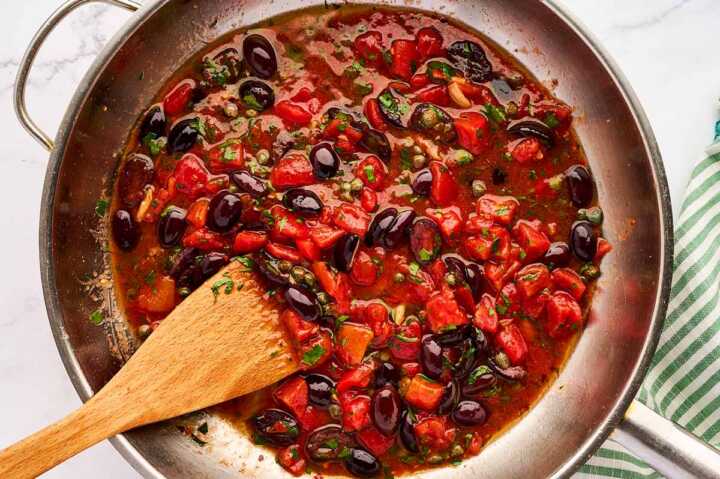
- Sauté: While the pasta water is coming to a boil, place a large skillet over medium-low heat. Once hot, add the oil and sauté the crushed garlic and red pepper flakes (if using) for 30 seconds, just until fragrant.Add the anchovies (if using) and sauté for 30-60 more seconds, until they fall apart in the oil.Add the olives and capers and continue sautéing for 1 more minute.Finally, add the drained diced tomatoes and HALF of the chopped parsley and sauté for 2 more minutes, stirring often.5 tablespoons olive oil, 4 cloves garlic, red pepper flakes, 4 canned anchovies, 5 oz black olives, 2 heaping tablespoons small capers, 1 (14.5-oz) can diced tomatoes, 0.25 cup packed fresh parsley
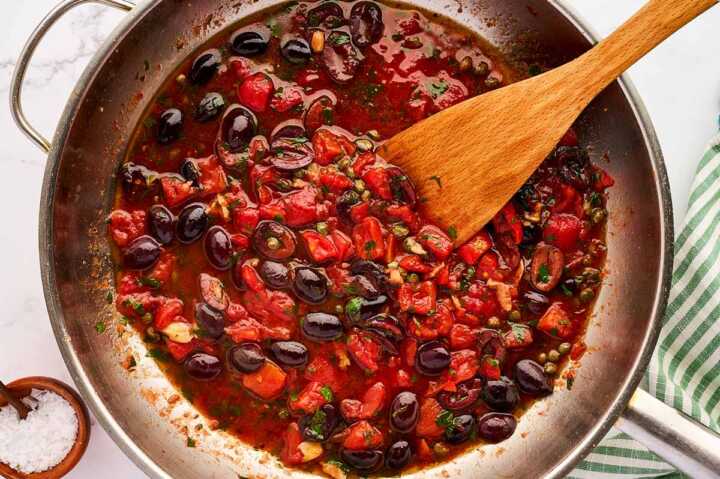
- Simmer: Cover the sauce with a lid and simmer over low heat for 8-10 minutes. Season very lightly with salt.
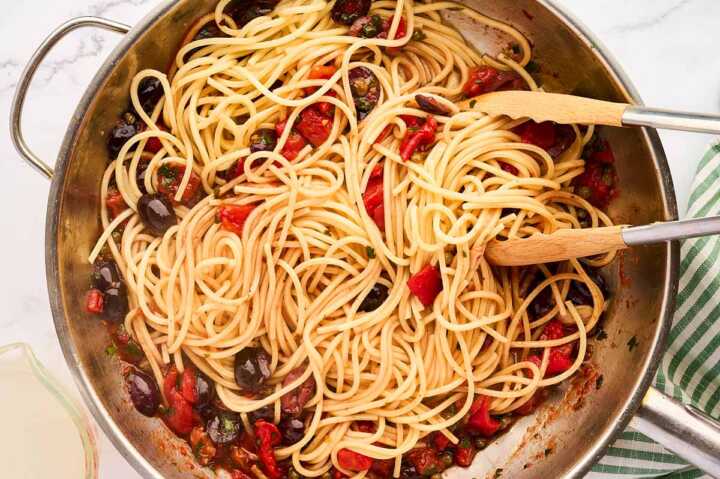
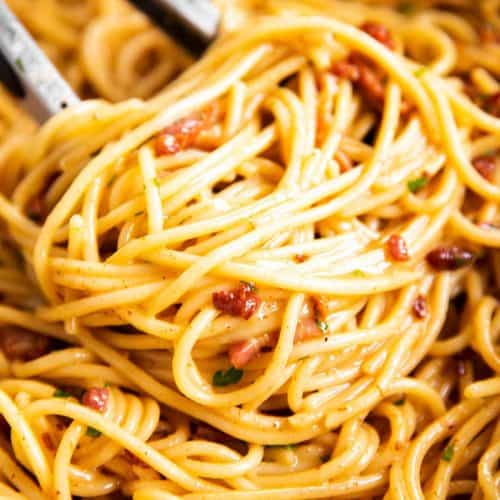
- Finish:Add the cooked pasta to the sauce in the skillet and simmer over medium heat for a few minutes, adding ½ cup of pasta water, and more as needed 2 tablespoons at a time, until the sauce is glossy, the pasta is fully cooked and coated in a clingy sauce.
- Serve:Taste and adjust salt/pepper to your taste. Serve immediately with the remaining chopped parsley!0.25 cup packed fresh parsley, cracked black pepper
Notes
- The “Al Dente” Rule: Pull your spaghetti from the boiling water 2 minutes before the package directions suggest. The pasta must be slightly undercooked so it can finish its final minutes in the skillet, absorbing the savory sauce during the process of finishing the cooking in the skillet without becoming mushy.
- Emulsifying the Gloss: If your sauce looks oily or separated once the pasta is added, don’t panic. Add an extra splash of starchy pasta water and toss vigorously over medium-high heat. The agitation is what binds the fats and liquids into that signature mirror-like finish. Using high-quality bronze-cut pasta is highly recommended as its rough texture releases more starch, ensuring a thicker, more cohesive emulsion.
- Salt Management: This dish relies on “salt-forward” ingredients (anchovies, olives, capers). Always taste the sauce last — after the pasta and water have been incorporated — before adding any extra salt.
More quick pasta recipes
🍝 Substitution & Ingredient Notes
In general, this is a simple dish that benefits from the best quality ingredients that fit into your grocery budget!
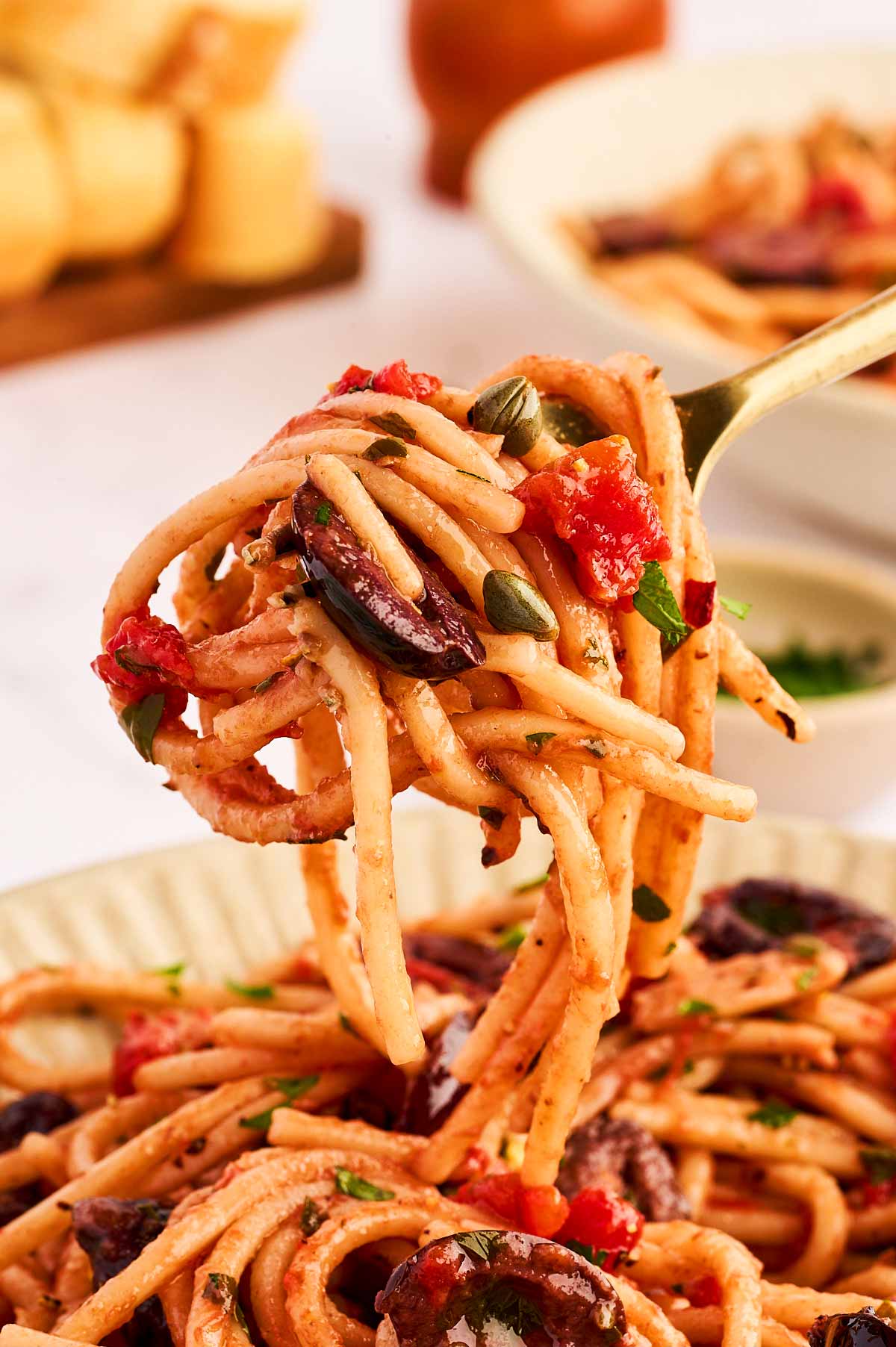
The Pasta Choice: Use bronze-cut spaghetti for the best result. These noodles have a rough, “dusty” surface that acts like velcro for the sauce, unlike smooth pasta. However, regular spaghetti will still work, the sauce just doesn’t have the same “sticking power”.
Capers in Salt vs. Brine: Salt-packed capers offer a superior, floral flavor. Just be sure to rinse them thoroughly until no salt remains on them, or your dish will be a salt bomb.
The “Anchovy” Fear: If you hate fish, don’t worry. The anchovies melt into the oil, providing a deep umami (savory) backbone without making the dish taste “fishy.” But you can easily skip them if you prefer!
Olive Varieties: While Kalamata is a great fallback, look for Gaeta or Castelvetrano for a more authentic Mediterranean profile.
The Science of “The Gloss”: Why Pasta Water is Magic
The secret to a perfect Puttanesca isn’t in the tomatoes — it’s in the emulsification.
Why the sauce looks “watery” at first:
When you first combine your pasta and tomato base, you have two separate phases: the oil/fats and the watery juice from the tomatoes. They don’t naturally want to mix.
The Starch Solution:
By adding your reserved pasta cooking water to the skillet, you are introducing gelatinized starch. This starch acts as an emulsifier, binding the olive oil and tomato juices together.
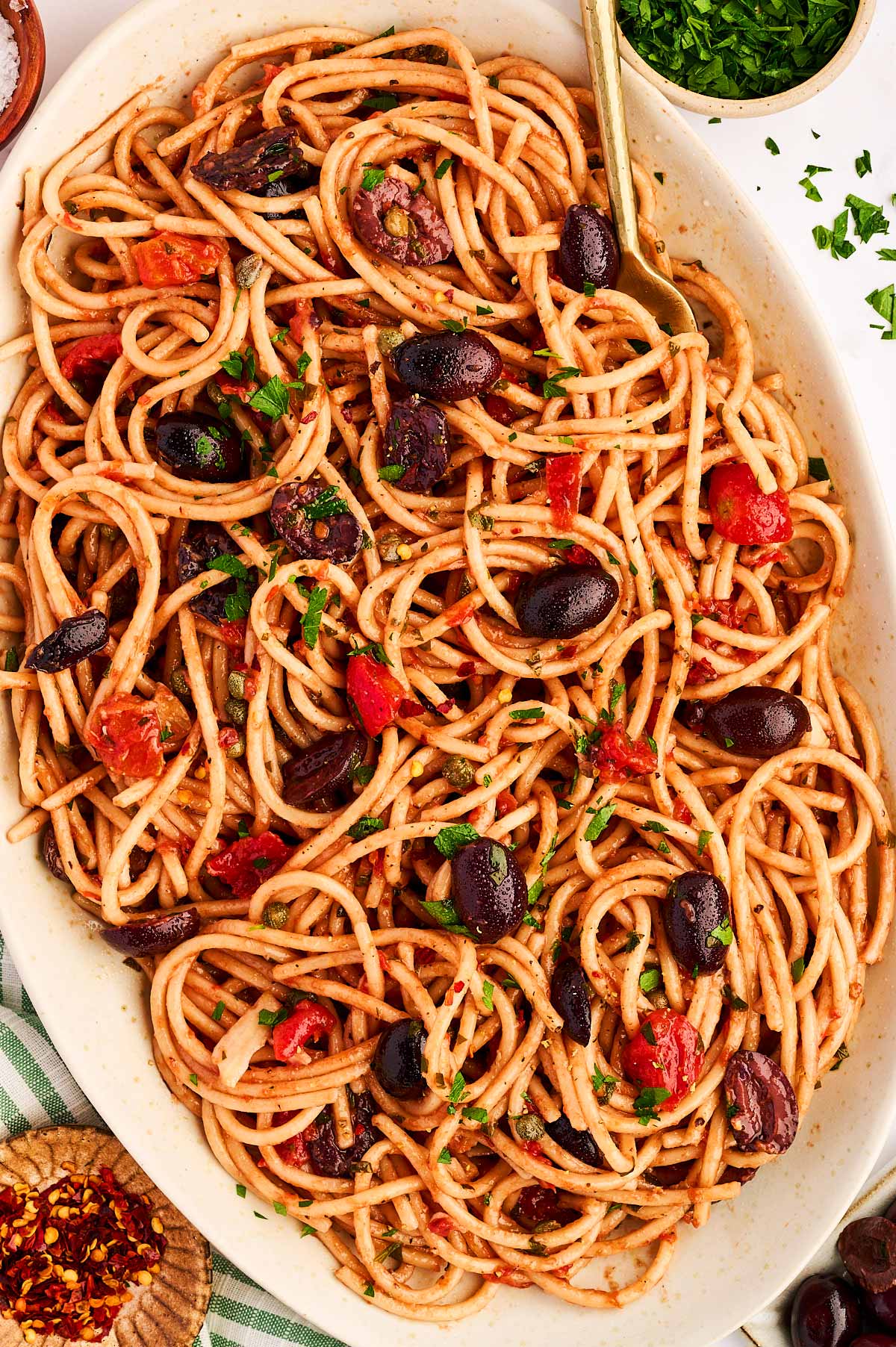
The Result: The sauce transforms from a thin juice into a thick, shimmering glaze that clings to every strand of spaghetti. If it looks too dry, add extra pasta cooking water 2 tablespoons at a time until that “mirror-like” gloss appears.
The Finishing Technique:
The real magic happens during the final stage, called “Mantecatura”. This is the process of finishing the pasta in the skillet to create a creamy, cohesive bond between the noodle and the sauce. By pulling your spaghetti out of the boiling water 1-2 minutes early and tossing it vigorously with the sauce and starchy water, you trigger a physical transformation.
The friction and heat release extra starches (which pasta releases the most during the final stages of cooking), turning the olive oil and tomato juices into a thick, restaurant-quality glaze.
How to Serve Your Pasta Puttanesca:
To elevate this humble dish into a centerpiece, try these additions:
- The Crunch Factor: Top with toasted breadcrumbs (mollica) sautéed in a little olive oil for a texture contrast common in Southern Italy.
- Herb Freshness: Save the second half of your parsley for the very end. The “cooked” parsley flavors the sauce, but the “fresh” parsley provides the aromatic lift.
- Heat Level: If serving for a crowd, keep the red pepper flakes on the side so guests can control the “kick.”
The dish can be served casually from the skillet. For a dinner party, arrange it on a warmed platter and serve it “family-style”!
💡FAQs
Be very careful! Between the pasta water, anchovies, olives, and capers, there is already significant sodium. Always taste the sauce after the pasta is added before adding more salt.
Puttanesca requires “infusing” the oil. If the heat is too high, the garlic turns bitter. Keep it medium-low and move the pan frequently.
Yes, but you’ll need to cook them down longer (about 20 minutes) to achieve the same concentrated flavor as high-quality canned diced tomatoes.
Very ripe cherry tomatoes (halved or quartered) are incredibly delicious in this dish in the summer!

Comments
No Comments