


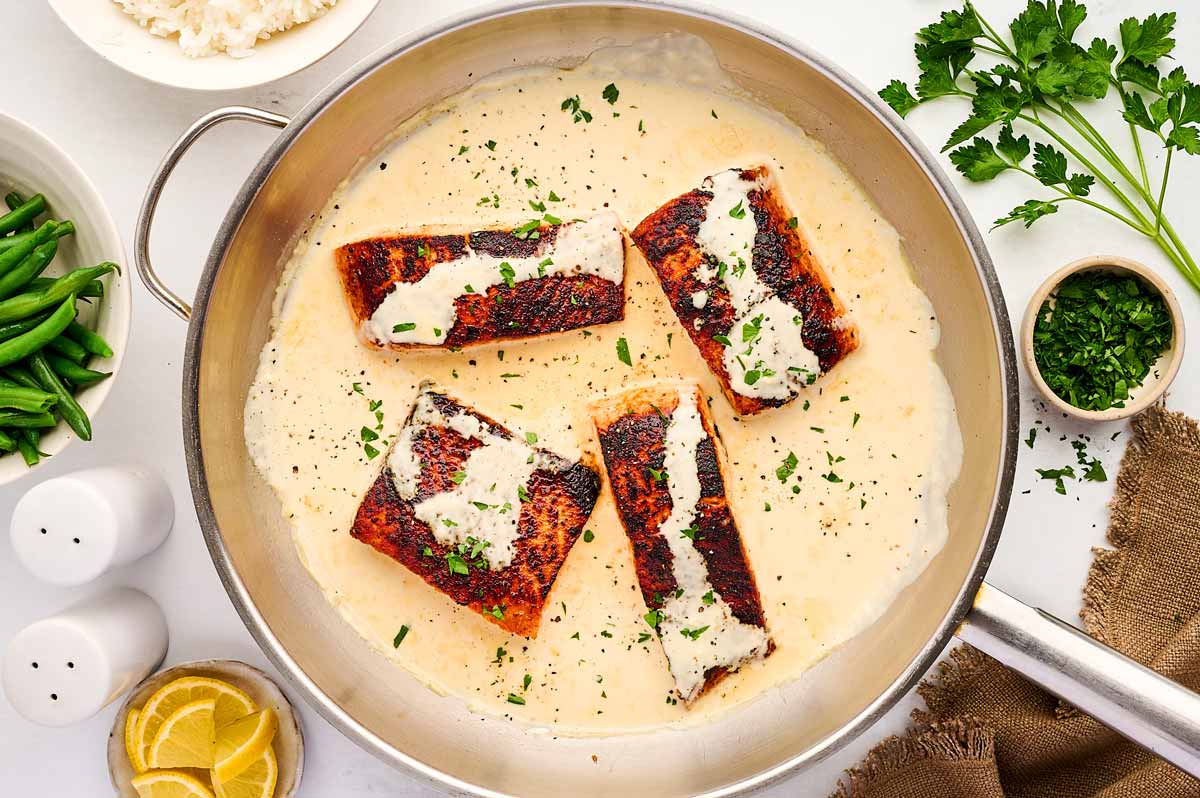
This One-Pan Creamy Dijon Salmon is the perfect 20-minute weeknight dinner. Seared to perfection and topped with a silky garlic-mustard sauce, it’s an easy way to elevate your evening meal without the stress.
What makes this recipe great
I know “salmon” and “creamy sauce” can sound like a lot of work for a Tuesday night, but this is SO easy. It uses one pan, basic pantry spices, and a splash of cream to turn a simple piece of fish into something really delicious!
- The 20-Minute Timeline: From patting the fish dry to drizzling the sauce, you’re done in less time than it takes to coordinate the carpool.
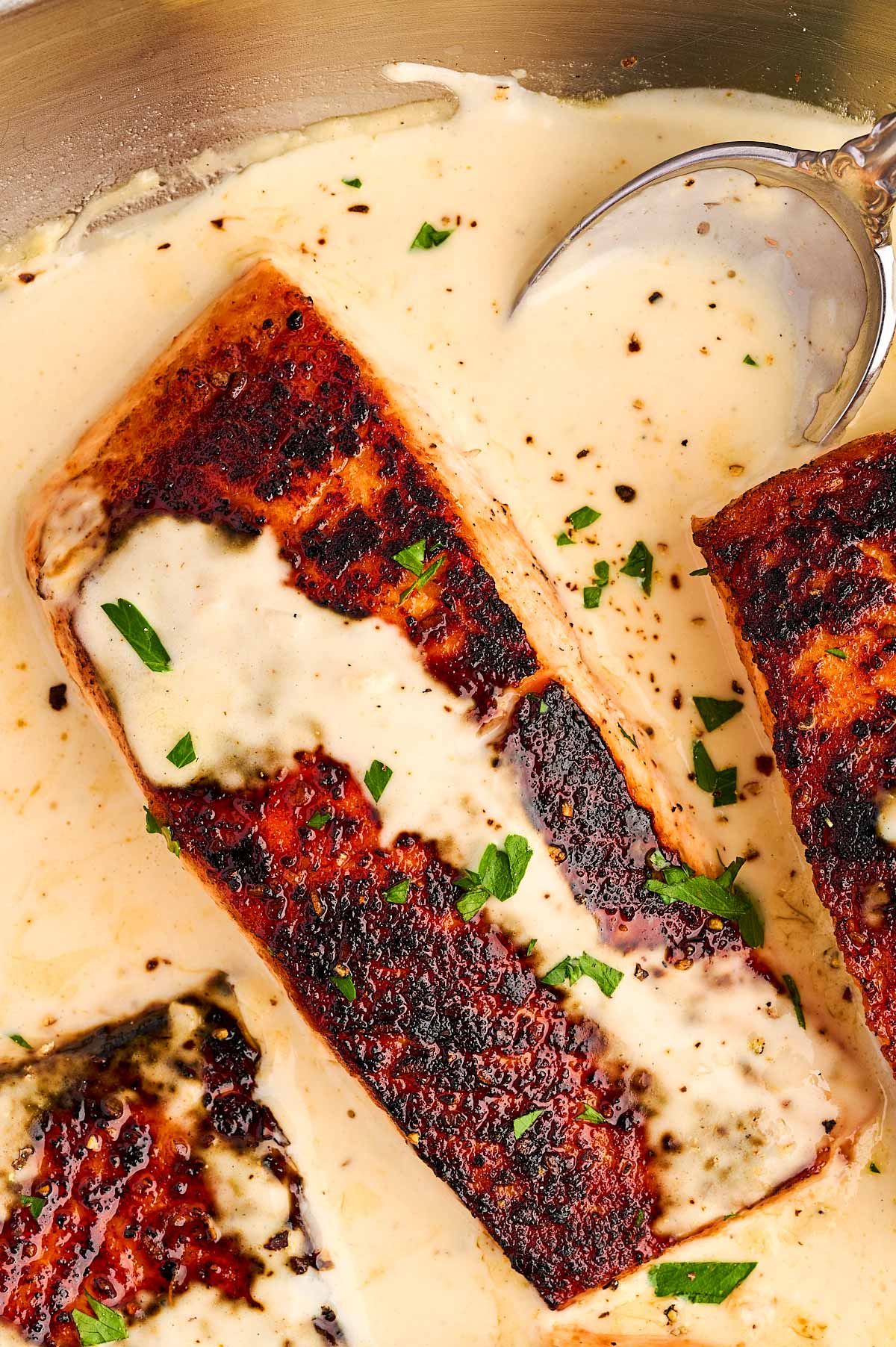
- No-Stick Confidence: I’m sharing the trick to getting that perfect sear without the fish tearing into a million pieces.
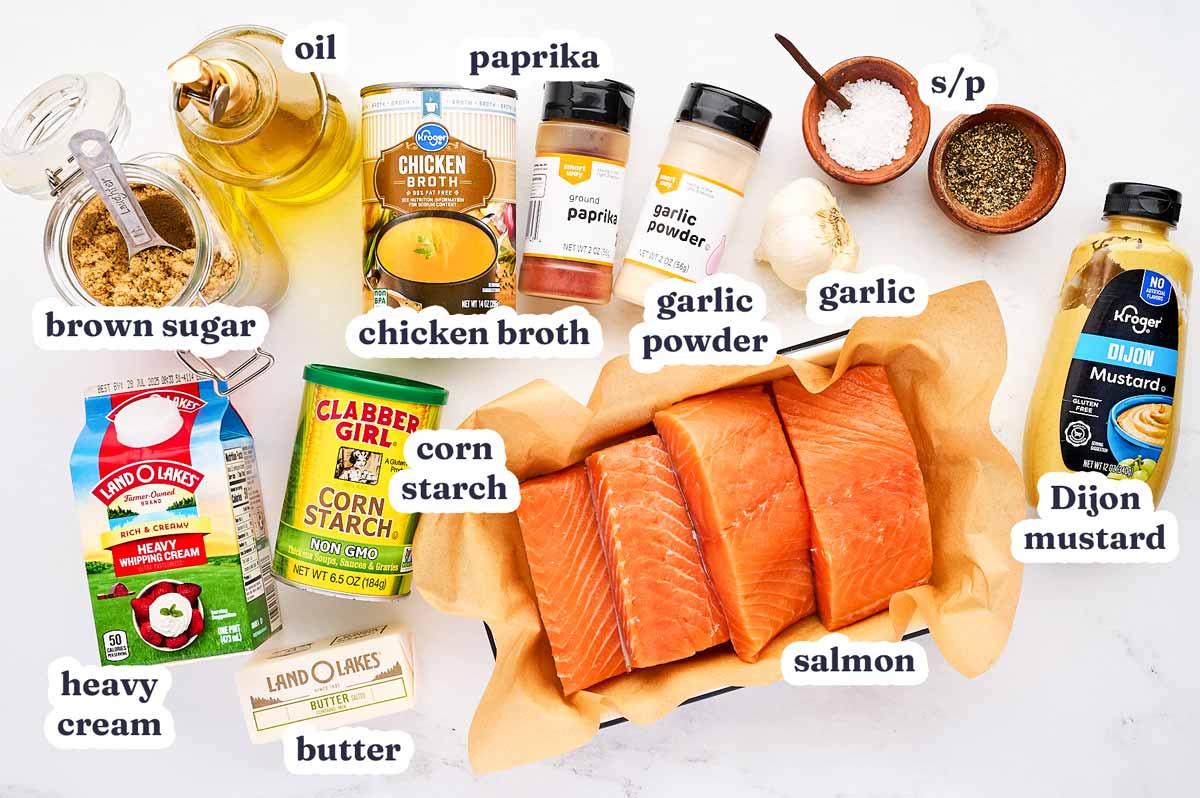
- Pantry Staples: Aside from the salmon and maybe the heavy cream, you probably have every single ingredient in your kitchen right now.
Let’s see how we make this:
Ingredients we’re going to use
This is about swaps and notes – jump to the ingredient list for the measurements etc.
Salmon Filets: I really prefer skin-on here. Even if you don’t eat the skin, it acts like a little safety blanket for the fish so it doesn’t overcook or fall apart in the pan.
Brown Sugar: Don’t skip this! It’s just a teaspoon, but it helps the salmon caramelize and get that gorgeous dark crust without making it taste “sweet.”
Heavy Cream & Cornstarch: This is the shortcut to a thick, silky sauce without having to stand over the stove reducing liquid for twenty minutes.
Dijon Mustard: It gives the sauce a “grown-up” flavor, but if you’re worried about the kick, start with half a tablespoon and taste as you go.
Recipe walkthrough
This is about tips and hints, and the process photos if you need a visual guide. Jump to the instructions for the precise steps.
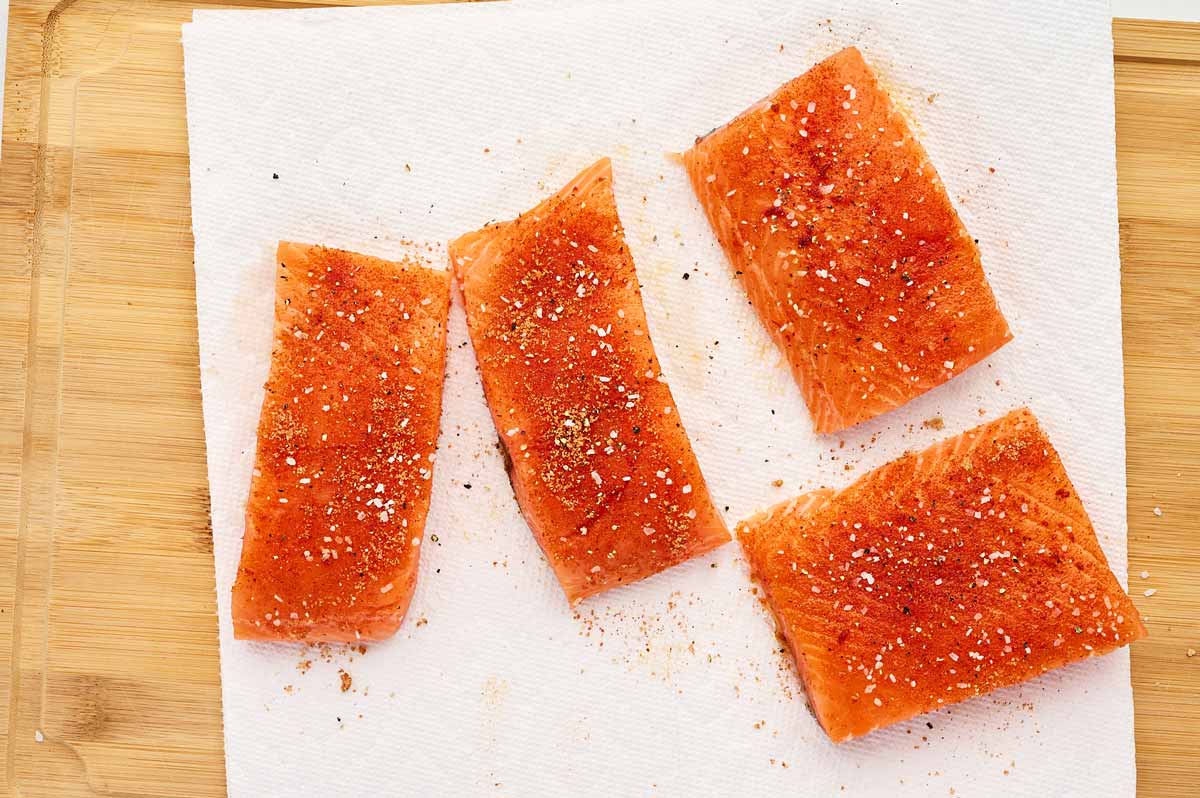
1: The seasoning.
Use a paper towel and really pat down that salmon before seasoning. If it’s wet, it’ll steam instead of sear, and you won’t get that nice crust.
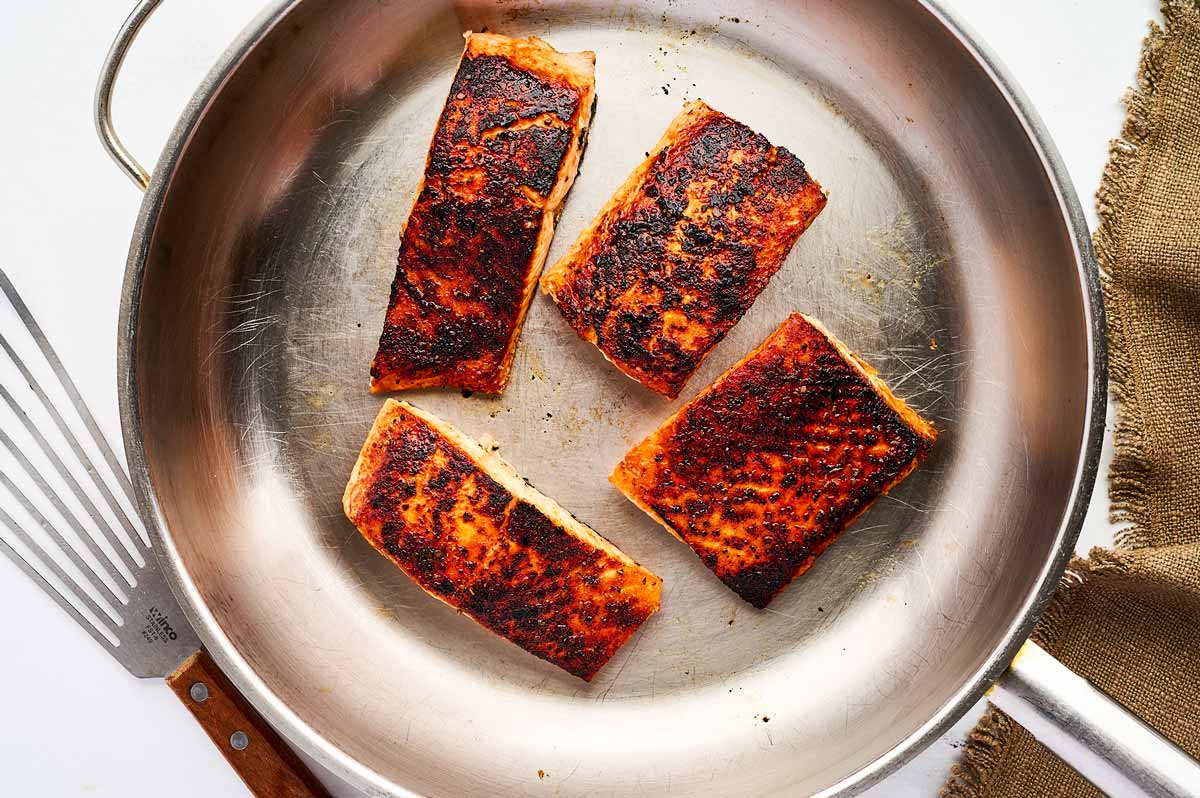
2: The layering.
When you put the salmon in the hot oil, leave it alone. If you try to flip it and it feels stuck, it’s not ready. It will naturally “release” from the pan once that crust has formed. Trust the process!
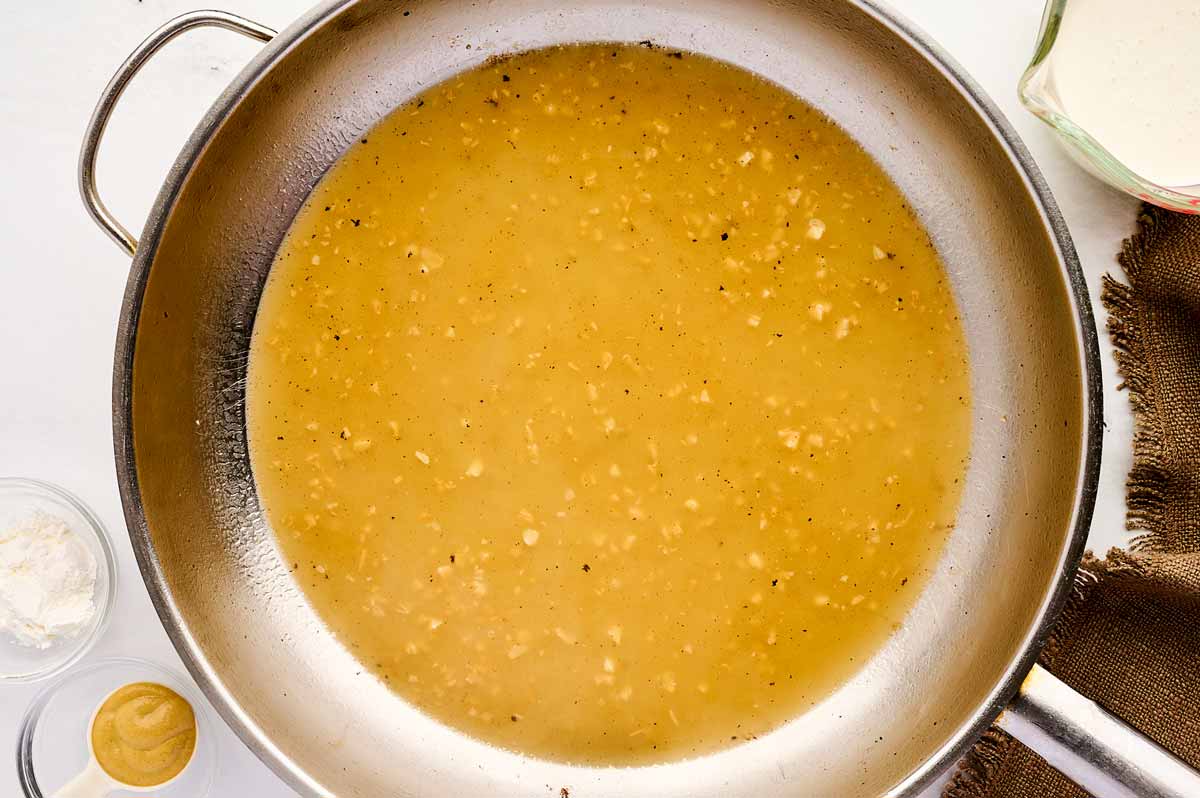
3: The sauce base.
If your butter starts turning black or there are burnt bits of seasoning in the pan after the salmon is done, take ten seconds to wipe it out with a paper towel. It keeps the cream sauce looking white and fresh instead of muddy.
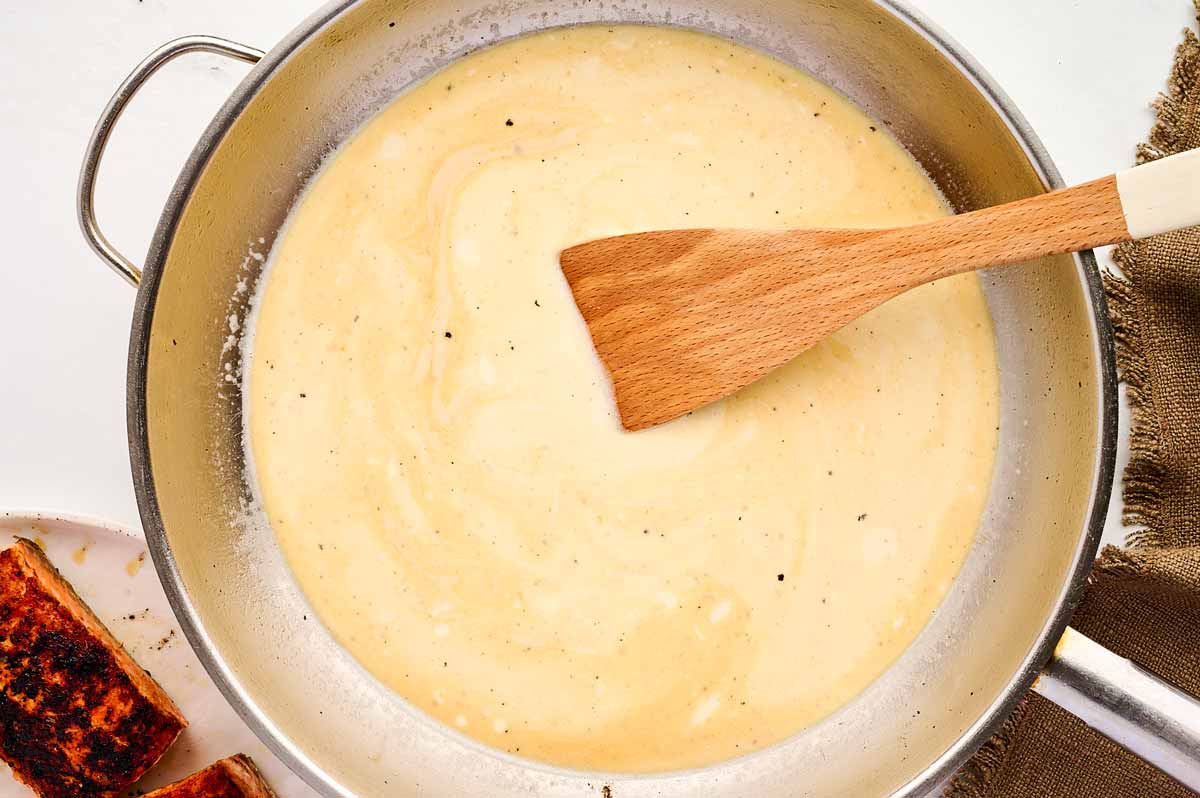
4: Adding the cream.
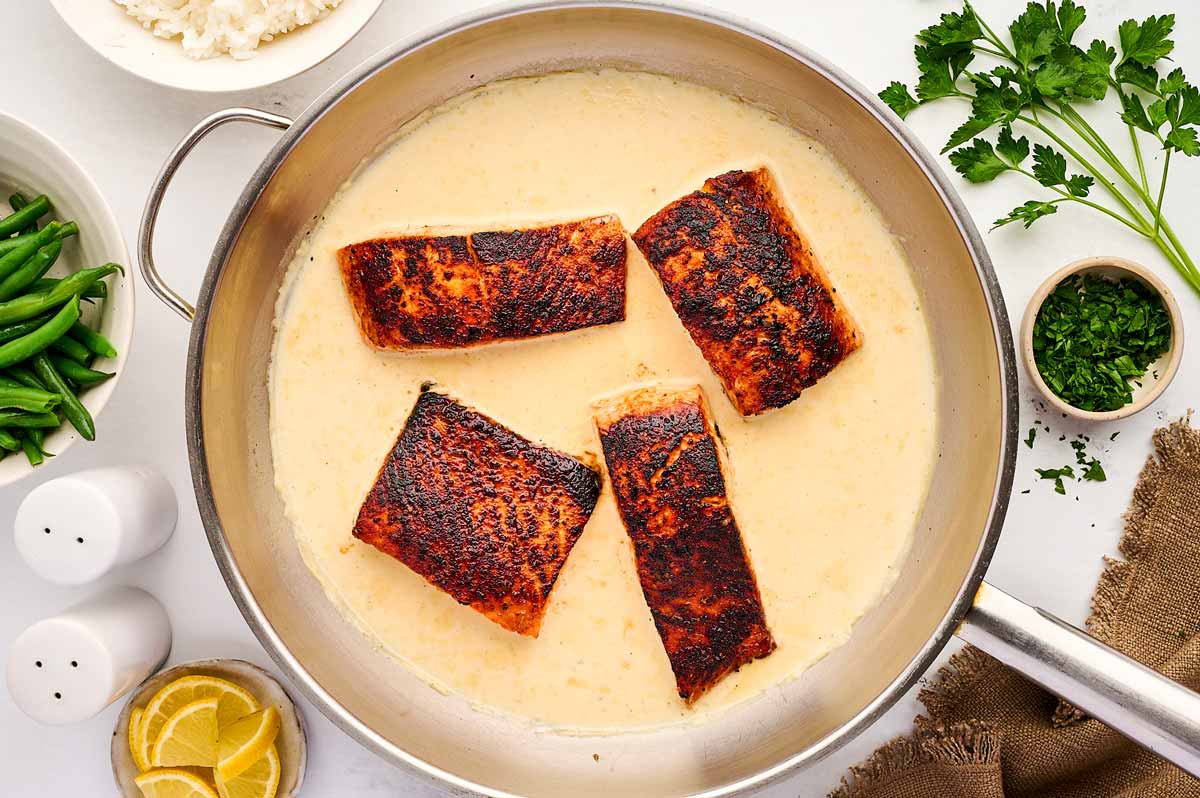
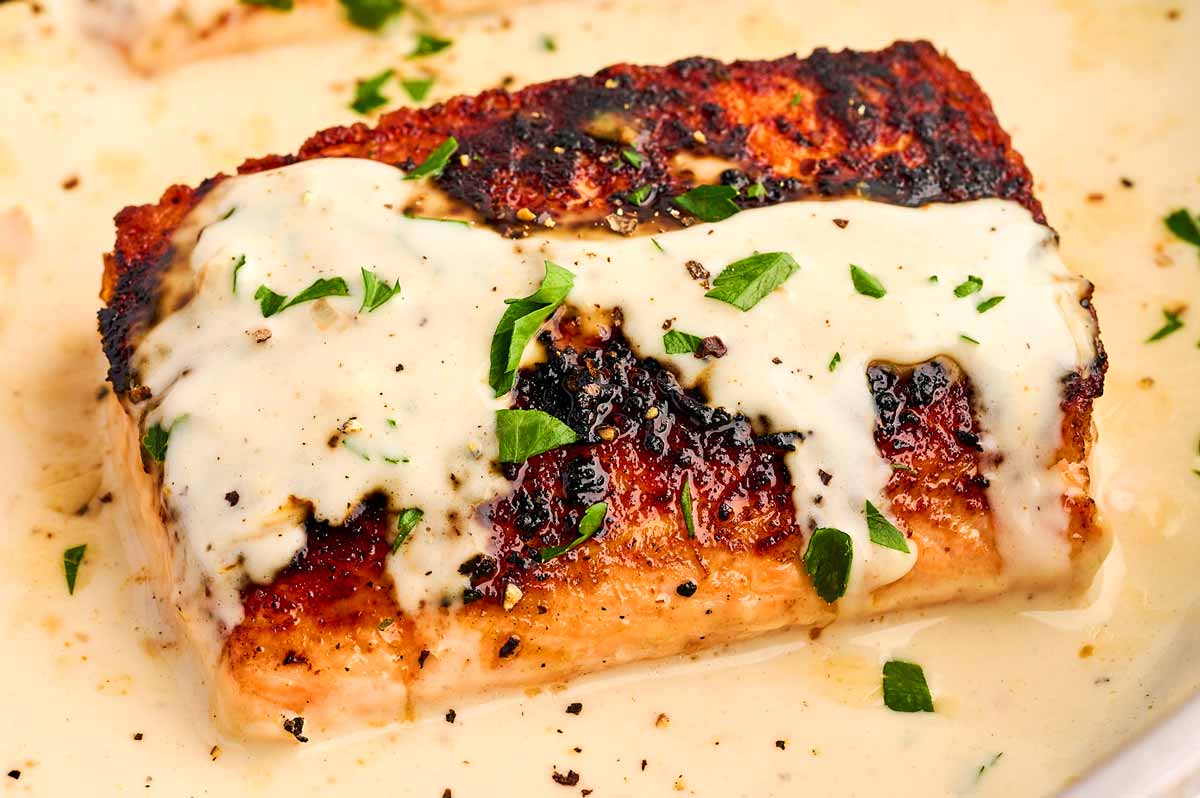
Once you add the cream mixture, keep the heat low. You want a “lazy bubble,” not a rolling boil. Boiling heavy cream can make it separate, and nobody wants an oily sauce.
5: Serve.
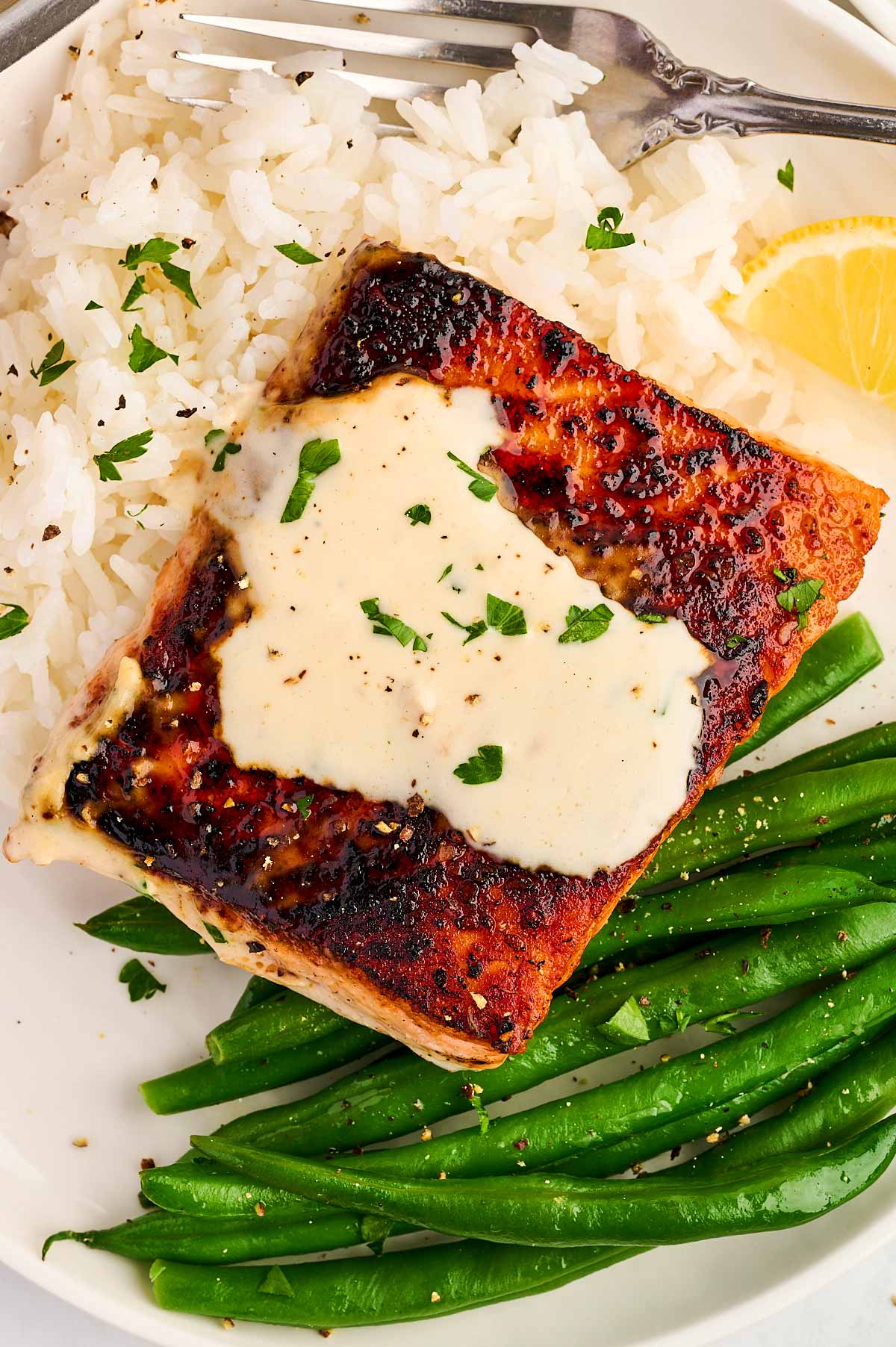
Heat through the salmon in the sauce, then serve it immediately. This sauce is liquid gold, so serve it over something that can soak it up. I usually do a quick pot of white rice or some mashed potatoes, plus a pile of green beans, roasted asparagus or roasted broccoli.
Tl; dr: All the important stuff at a glance
If you read nothing else in this post, this is what you need to know:
- Dry the fish: Moisture is the enemy of a good sear.
- Patience is key: Don’t flip the salmon until it moves easily when you nudge it with a spatula.
- Whisk the starch: Mix the cornstarch into the cold cream before adding it to the pan to avoid lumps.
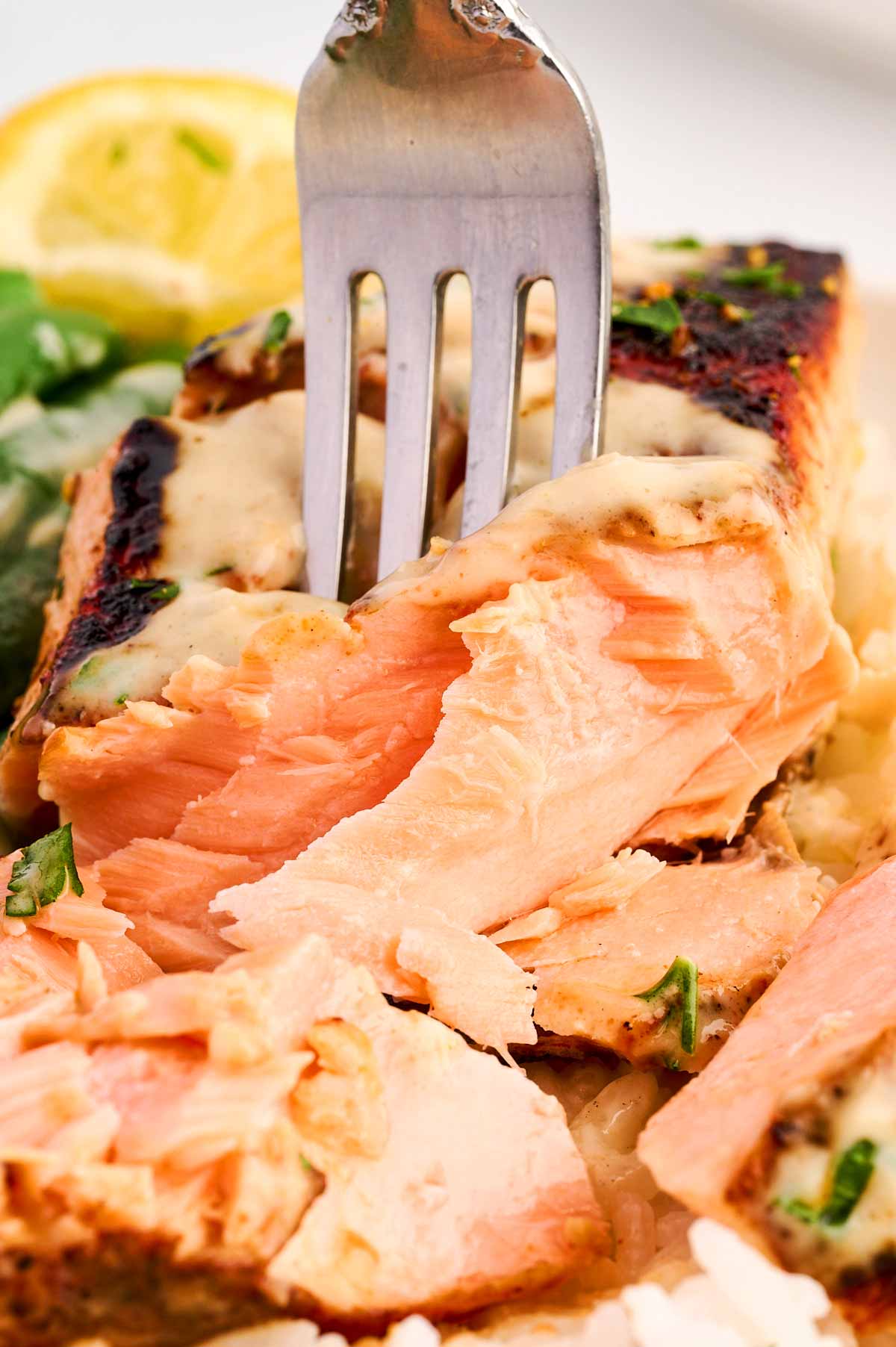
- Low heat for the finish: Simmer gently at the end so the cream stays smooth and the salmon stays tender.
- Quick recipe rundown: Dry and season salmon. Sear and set aside. Start sauce base, add cream and simmer gently. Place fish back into sauce to heat through, then serve.
FAQs
Can I use frozen salmon?
Yes, just make sure it is completely thawed and patted very dry. Frozen salmon tends to hold more moisture, so the “drying” step is even more important.
What if I don’t have chicken broth?
Vegetable broth works perfectly fine. In a real pinch, you can use water with a little extra pinch of salt, but broth definitely adds more depth to the sauce.
Is it okay to use half-and-half instead of heavy cream?
You can, but the sauce won’t be quite as rich. If you swap it out, you might need an extra teaspoon of cornstarch to help it reach that thick, velvety consistency.
Want more easy skillet dinners? Try my Creamy Pesto Chicken, the One Pan Lemon Chicken Pasta or the Caprese Chicken Skillet!

Creamy Dijon Salmon
Ingredients
Salmon
- 1 pound salmon (skin-on filets preferred)
- ½ teaspoon garlic powder
- ½ teaspoon ground paprika
- 1 teaspoon light brown sugar
- salt and ground black pepper (to taste)
- 1 tablespoon oil
Sauce
- 1 tablespoon butter
- 2-3 cloves garlic (minced)
- 1 cup chicken broth (Note 1)
- ¾ cup heavy cream (Note 2)
- 1 tablespoon cornstarch (Note 3)
- 1 tablespoon Dijon mustard (or more to taste)
Instructions
- Prep salmon: Pat salmon fillets dry with paper towels. Season with garlic powder, ground paprika, brown sugar, salt and black pepper.1 pound salmon, ½ teaspoon garlic powder, ½ teaspoon ground paprika, 1 teaspoon light brown sugar, salt and ground black pepper
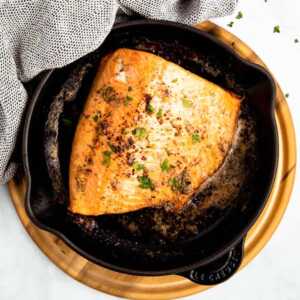
- Sear: Heat a large skillet over medium-high heat. Once hot, add the oil. Sear the salmon 4-5 minutes per side, until fully cooked to your liking.It doesn’t matter what side you start on if you use skin-on salmon, what matters is that you don’t try to move it on the side without skin until it is fully seared and releases from the pan. If it takes longer than 8 minutes in total to cook your salmon, finish it on the skin side until done to prevent uneven cooking.Remove from the pan and set aside on a plate.1 tablespoon oil
- Sauce: Reduce the heat to medium. (If there is a lot of residue in the skillet, wipe it off the heat using paper towels you hold with tongs.) Melt the butter in the skillet. Add the garlic and cook for 30 seconds. Add the chicken broth and simmer for 2 minutes.1 tablespoon butter, 2-3 cloves garlic, 1 cup chicken broth
- Add cream and finish: Whisk together the heavy cream, cornstarch and Dijon and stir into the skillet. Add the salmon and simmer very gently for 3-4 minutes (do not boil!), until the sauce is creamy and the fish is heated through. Serve immediately.¾ cup heavy cream, 1 tablespoon cornstarch, 1 tablespoon Dijon mustard
Notes
- Note 1: Vegetable broth or water with salt or bouillon are good substitutes.
- Note 2: Half-and-half works in place of the heavy cream, but the sauce will be less silky. Some extra cornstarch can be helpful.
- Note 3: Don’t skip the cornstarch, it creates a silky sauce and helps stabilize the cream so it’s less likely to split.







Comments
No Comments