
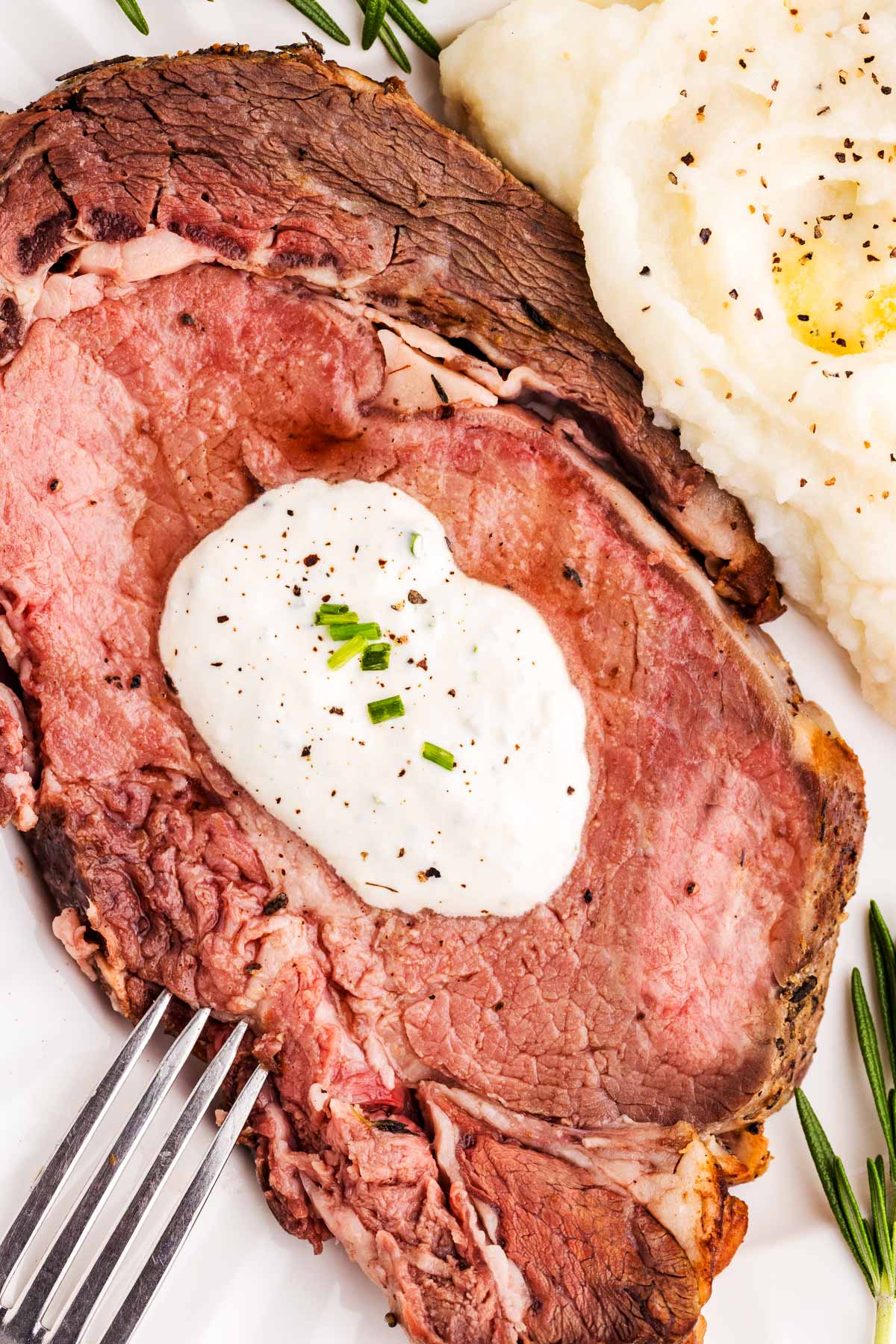
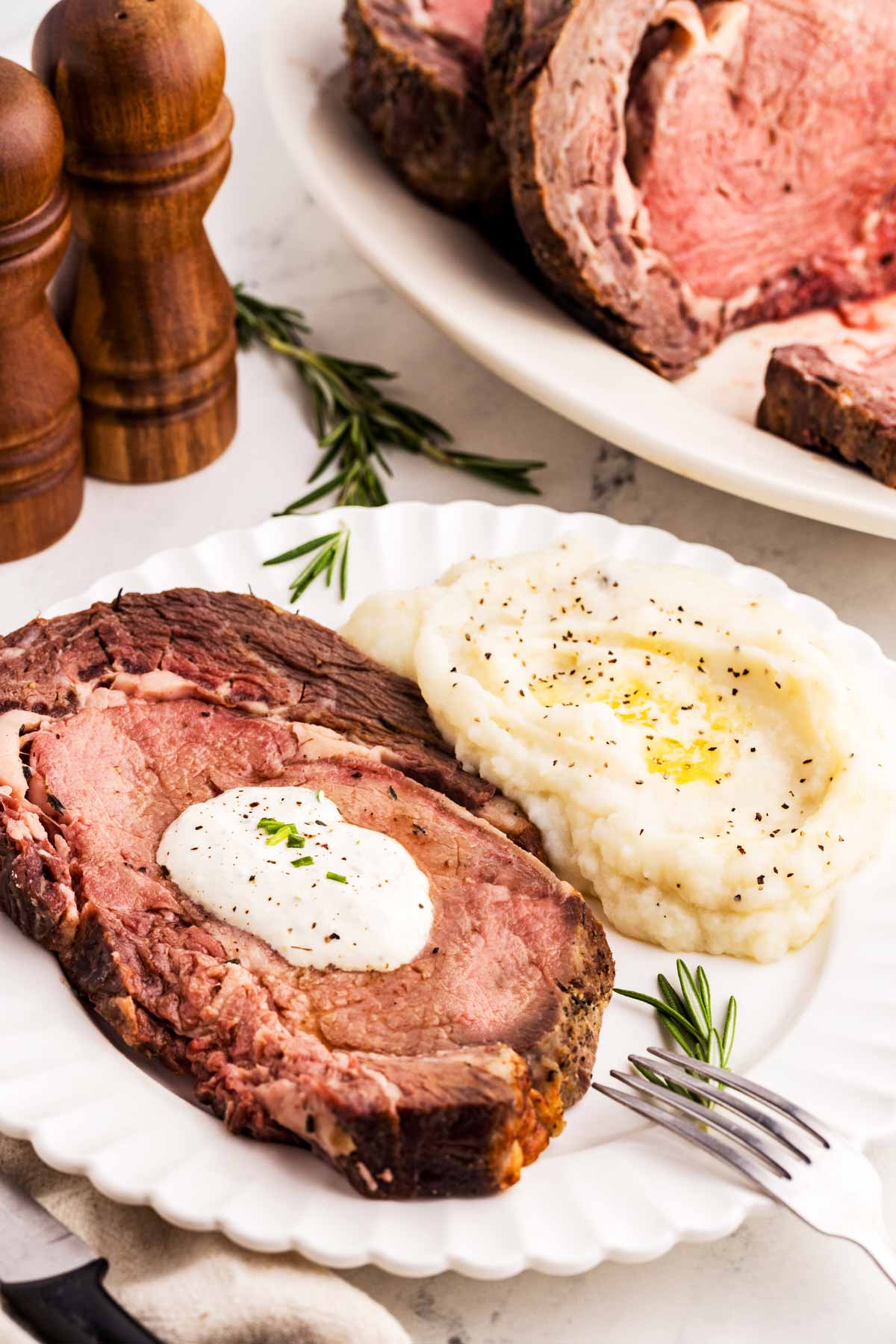
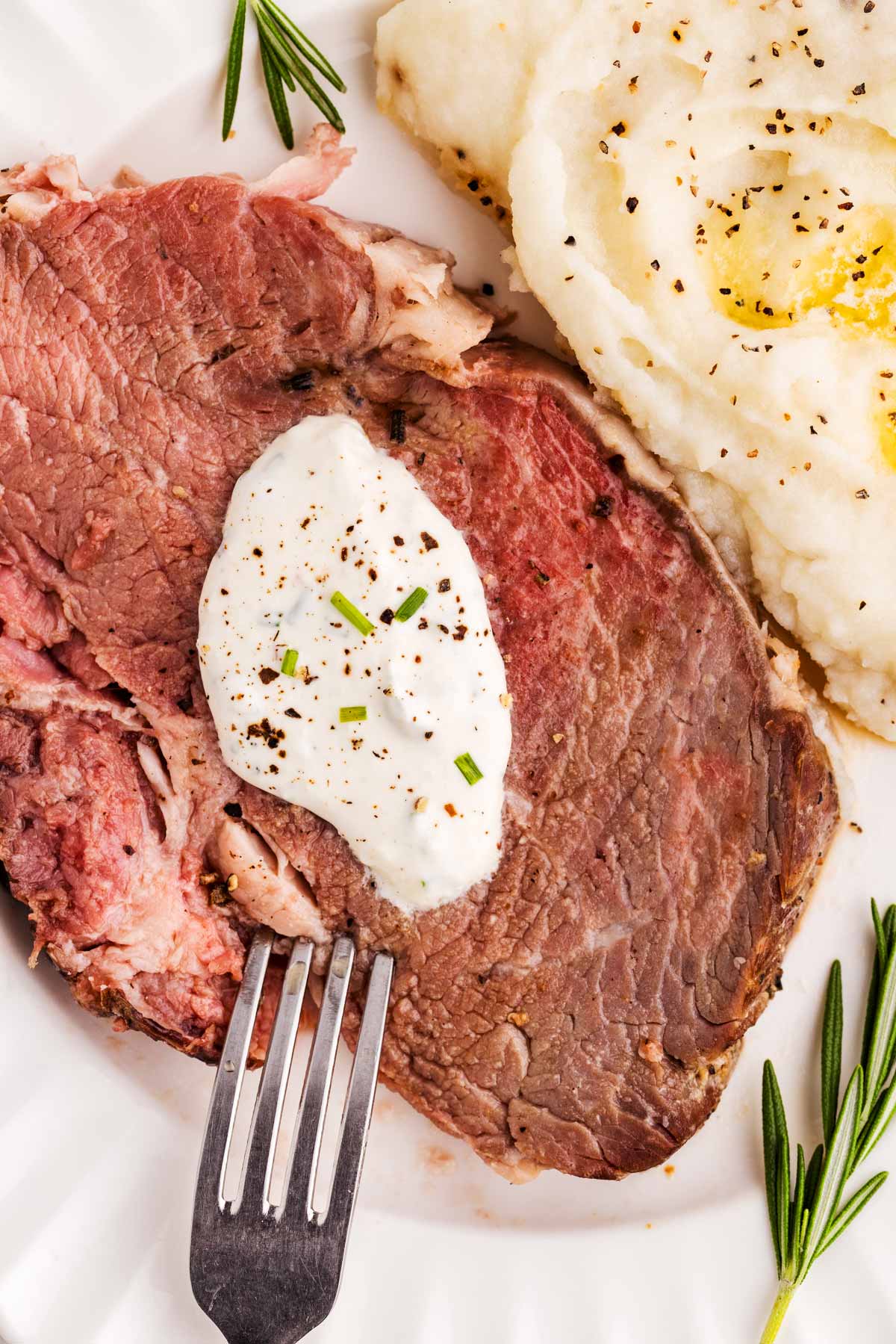
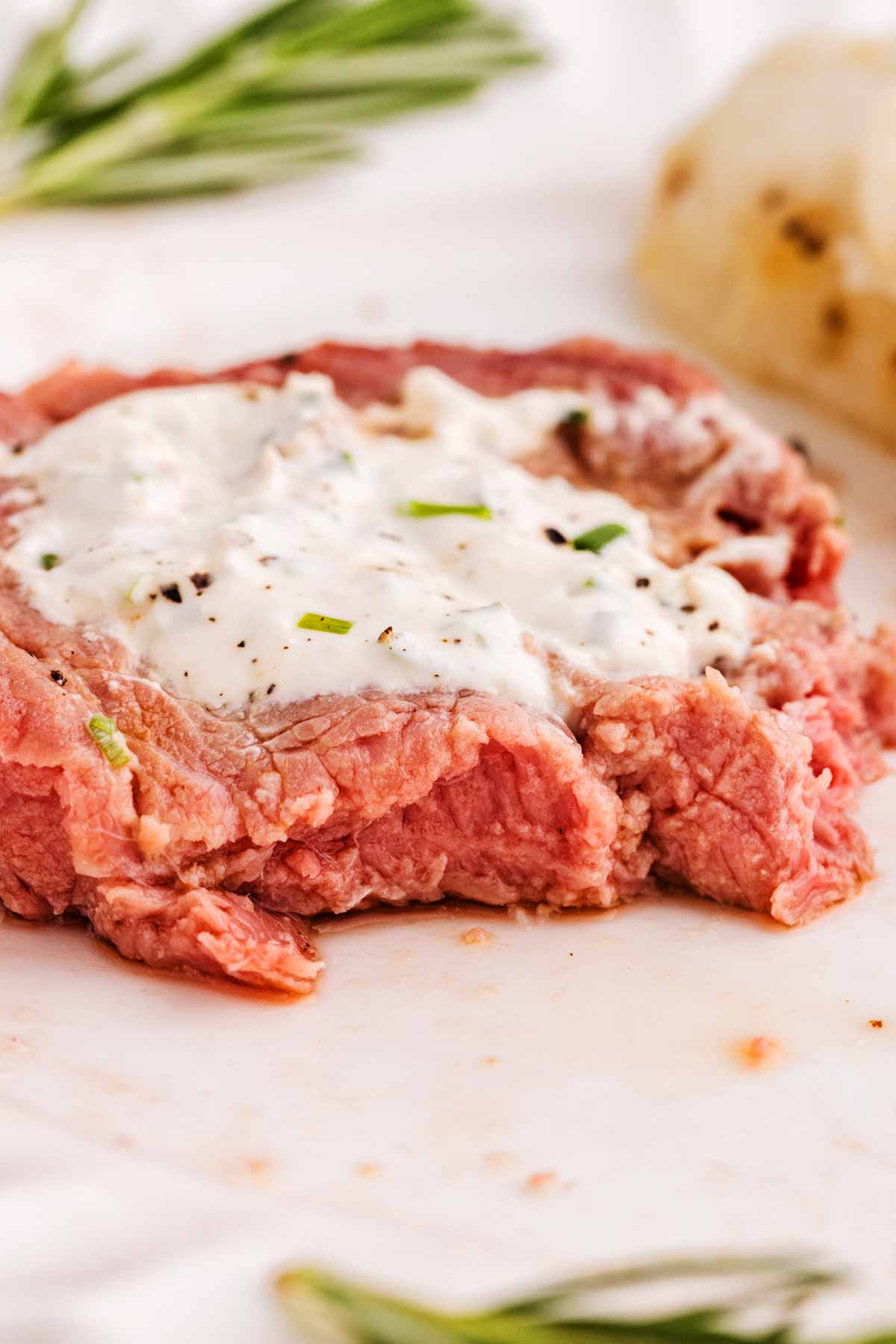
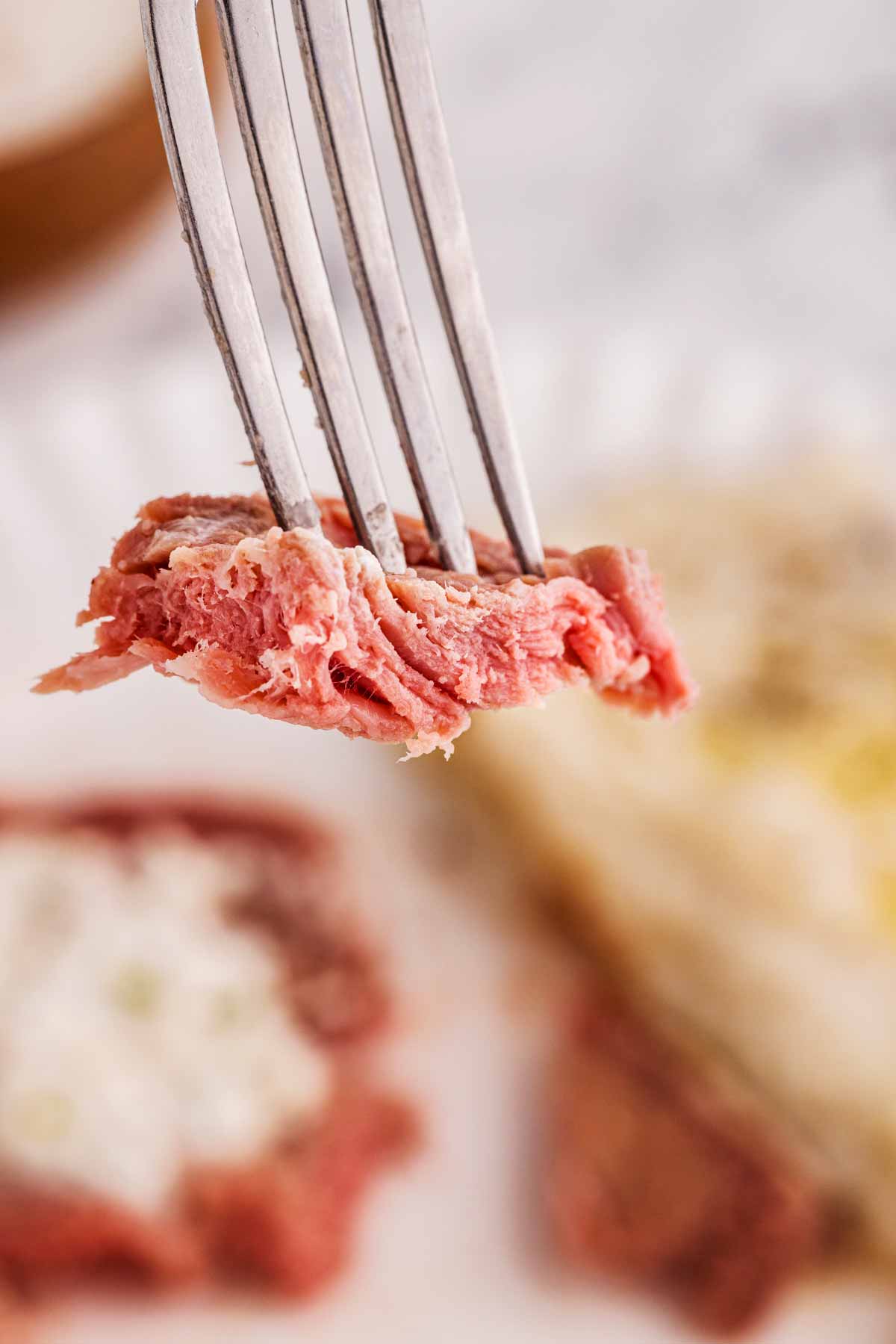
〈 swipe for more photos 〉
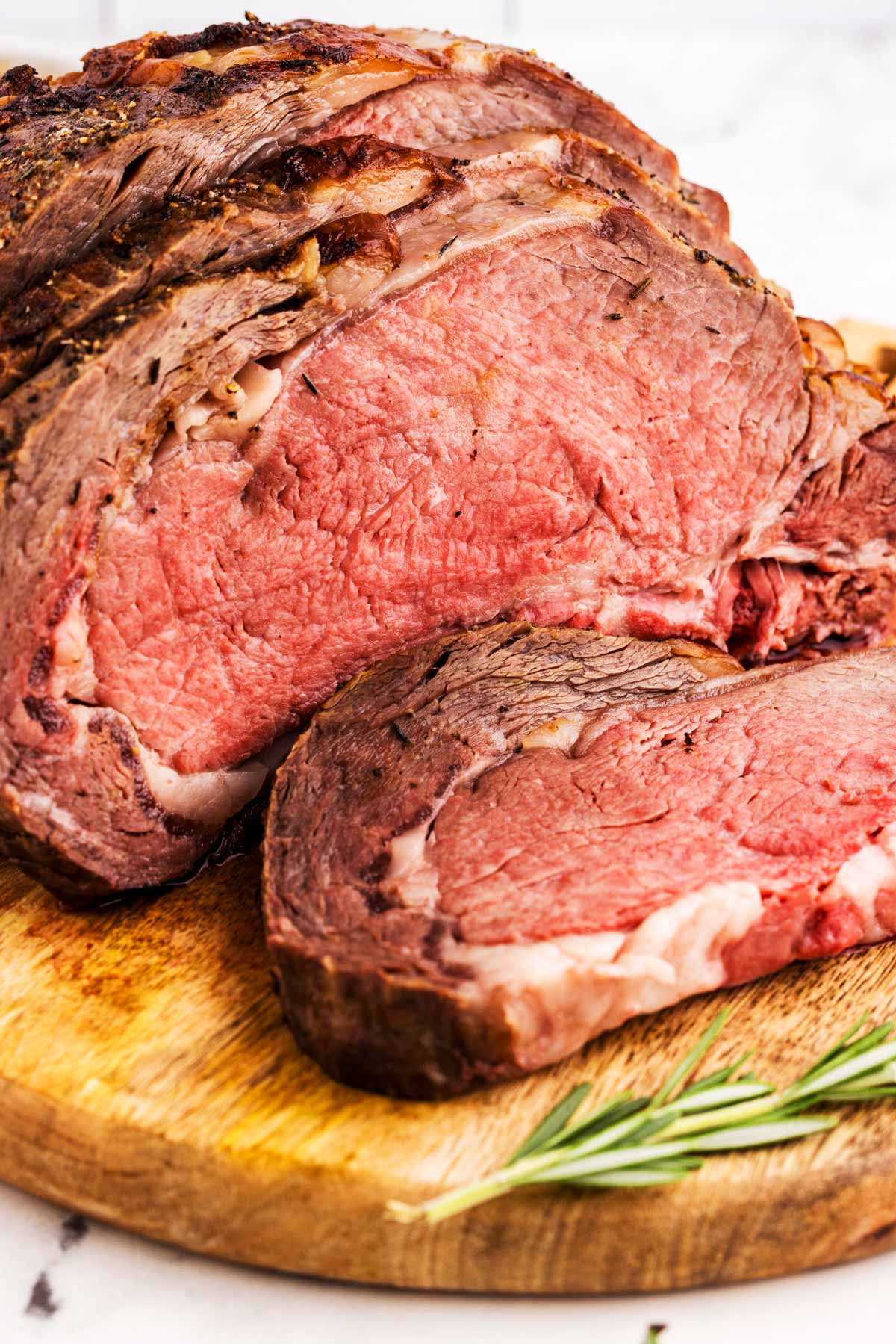
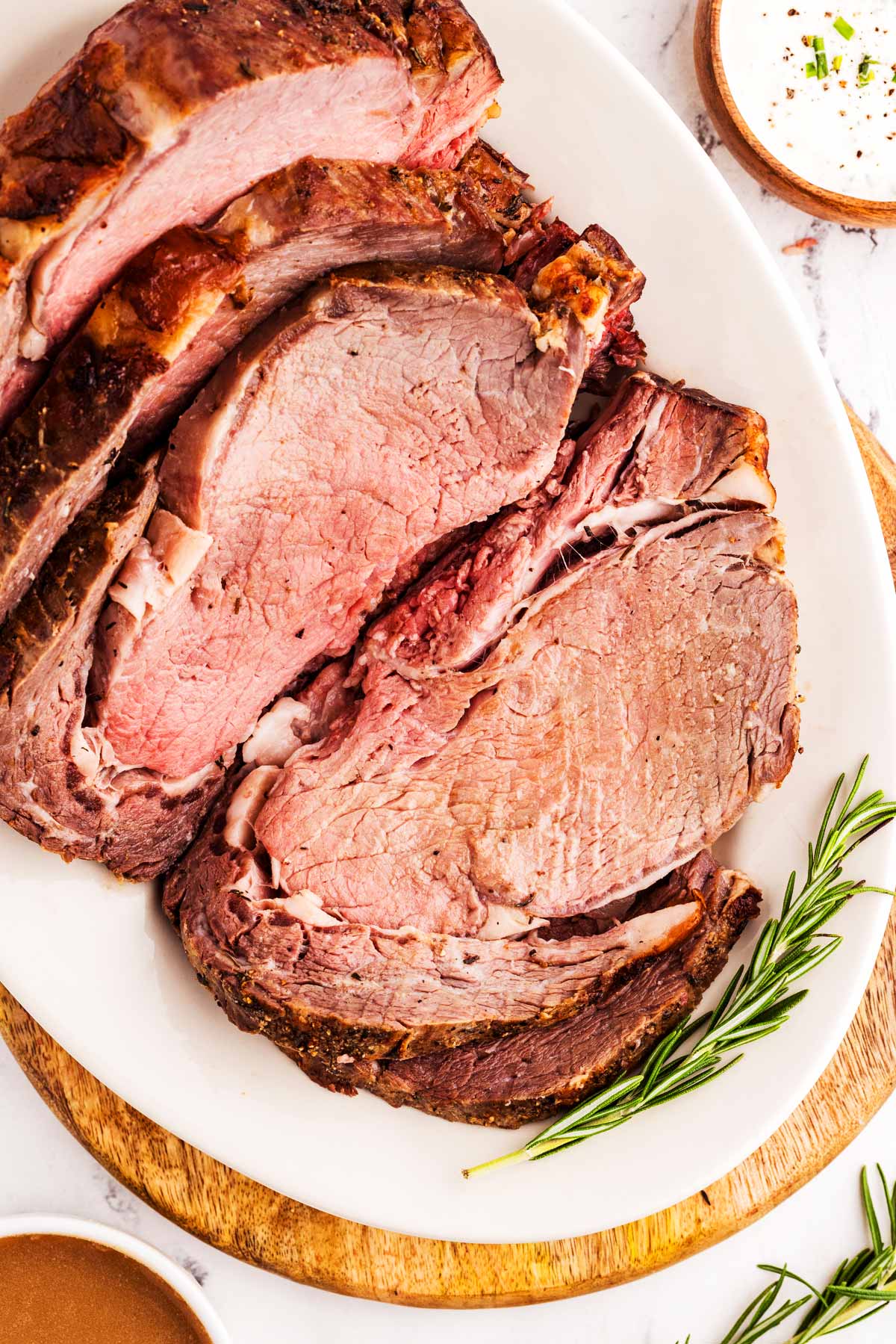
Prime rib is the kind of holiday roast that feels special – and a little intimidating. This reverse sear prime rib takes the pressure off, guiding you to a juicy, evenly cooked roast with a rich, golden crust you can be proud to serve!
Why this recipe works
- It’s simple and predictable. A slow, gentle roast means the meat cooks evenly from edge to center, with no overcooked outer layer.
- It’s written for real kitchens. Clear temperatures, flexible timing, and simple cues that work even if your oven isn’t perfect.
- It respects an expensive cut of meat. A simple seasoning, a thermometer, and a short high-heat finish bring out the best flavor – without stress or guesswork.
If you’re serving prime rib for a holiday or family gathering and want it to turn out just right, this is a method you can rely on.
Printable Recipe Card
Ingredients
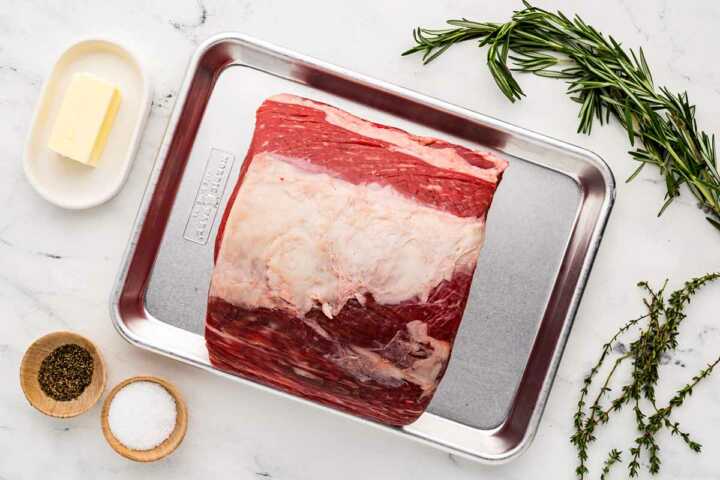
- 1 (6-pound) bone-in standing rib roast (fat trimmed to about ½ inch)
- kosher salt
- freshly ground black pepper
Optional
- 4 tablespoons unsalted butter (softened)
- fresh rosemary and/or thyme
Tips
- Food safety note: The USDA recommends cooking beef roasts to an internal temperature of 145°F, followed by the rest per the recipe (no final sear.) Many cooks choose to serve prime rib at lower temperatures (such as medium-rare) because it is traditionally prepared this way. For personal food safety concerns, cook to the temperature you are most comfortable with.
- Trim, don’t remove, the fat cap: About ½ inch protects the meat and adds flavor.
- Ventilation matters: The final sear can smoke—plan ahead.
- Slice against the grain for the most tender results.
Instructions
- Before you begin (important timing notes):This recipe is mostly hands-off, but it does need a little planning ahead. Please take a moment to read through the steps so you can give the roast the time it needs.Salt the roast 24 hours ahead for the best flavor and texture.Plan for about 2 hours resting at room temperature before cooking.Low-roast time is 3–4 hours, depending on oven temperature and roast size.A long rest (30–60 minutes) happens before the final sear.The final sear is quick (5–10 minutes), followed by a short rest before slicing.Most of the time is passive, but this isn’t a last-minute dish. If you follow the full 24-hour dry-salting step, plan on about 30 hours from start to serving.

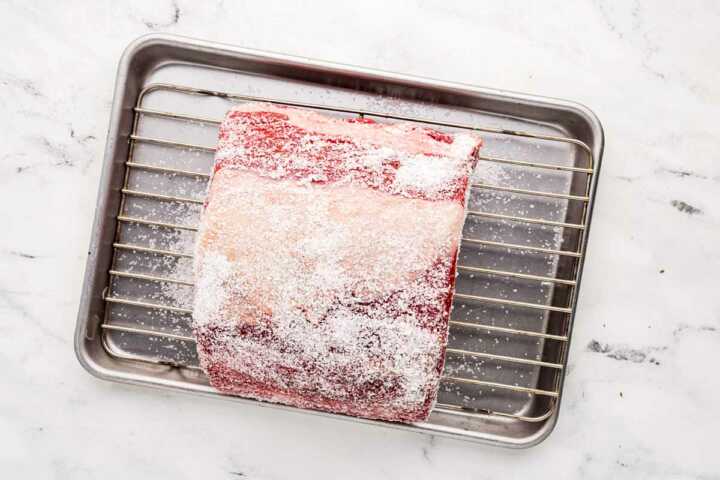
- Seasoning (ideally 24 hours ahead):Ideally 24 hours before cooking, generously season the rib roast on all sides with kosher salt. Place the roast on a rack set over a baking sheet and refrigerate loosely covered so air can circulate, safely distanced from other food, to allow the surface to dry and the salt to penetrate deeply into the meat.Note: This step is essential for flavor and for developing a good crust later. If you're short on time, do this step for the maximum amount of time you have available.1 (6-pound) bone-in standing rib roast, kosher salt
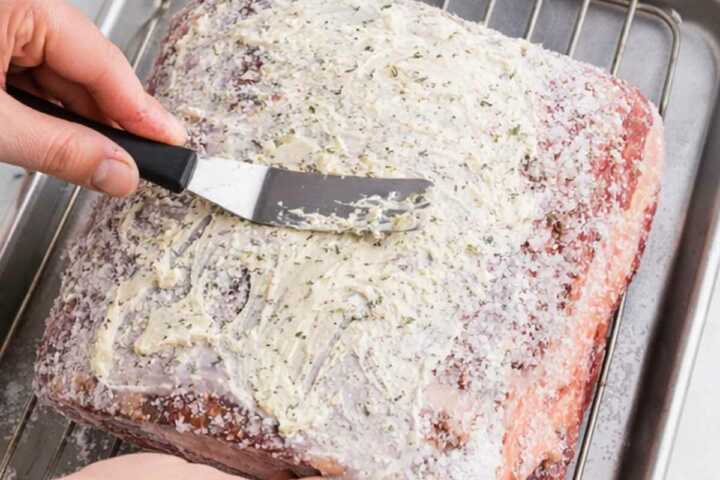
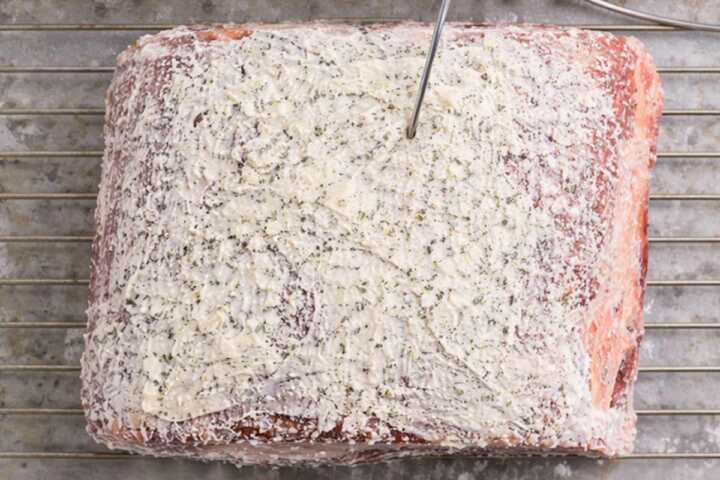
- Preparation before roasting:Remove the roast from the refrigerator around 2 hours before cooking to allow it to come to room temperature.If using the butter option, mix the softened butter with freshly ground black pepper and optional herbs. Slather evenly over the roast.If not using butter, simply season the roast generously with black pepper.freshly ground black pepper, 4 tablespoons unsalted butter, fresh rosemary and/or thyme
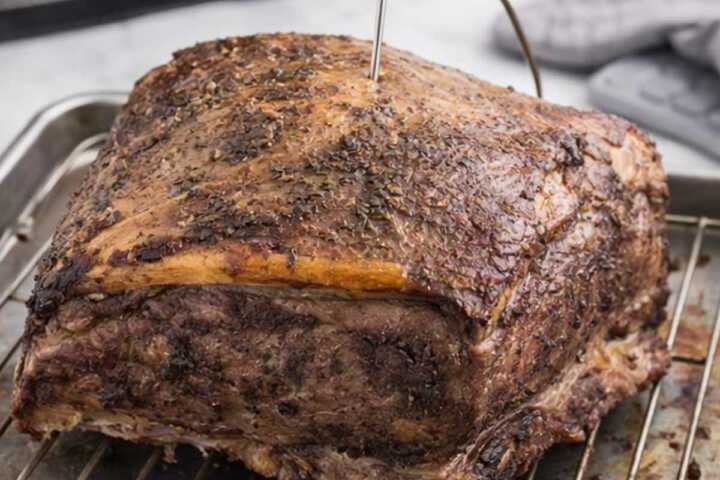
- Prepare for roasting:Preheat the oven to 200°F–225°F. (Some ovens struggle to hold very low temperatures – choose the setting your oven maintains most consistently.)Place the roast fat side up on a roasting rack set in a large roasting pan, or on a wire rack set inside a rimmed baking sheet. Insert a meat thermometer into the thickest center portion of the roast, avoiding the bone.
- Low-temperature slow roast:Place the roast in the oven and roast until the internal temperature reaches your preferred level you are comfortable with. These temperatures refer to the point at which the roast is removed from the low-temperature oven before the final high-heat sear:Rare: pull at 120–125°FMedium-rare: pull at 130°FMedium: pull at 135°FUSDA recommended minimum: 145°F, followed by the rest per the recipe, but skip the reverse searAfter resting and the final sear, the internal temperature will rise slightly.Estimated timingAt 225°F: about 30 minutes per poundAt 200°F: about 30–45 minutes per poundTotal cook time will typically be 3 to 4 hours, but always rely on temperature, not the clock.
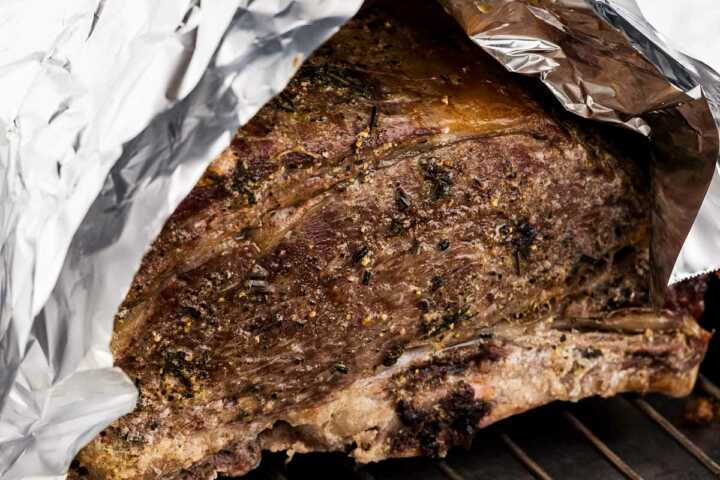
- Resting (critical for juicy meat):Remove the roast from the oven and place it on the counter, lightly tented with foil. Let it rest at room temperature for 30 to 60 minutes.This rest allows juices to redistribute and ensures even cooking before the final sear.
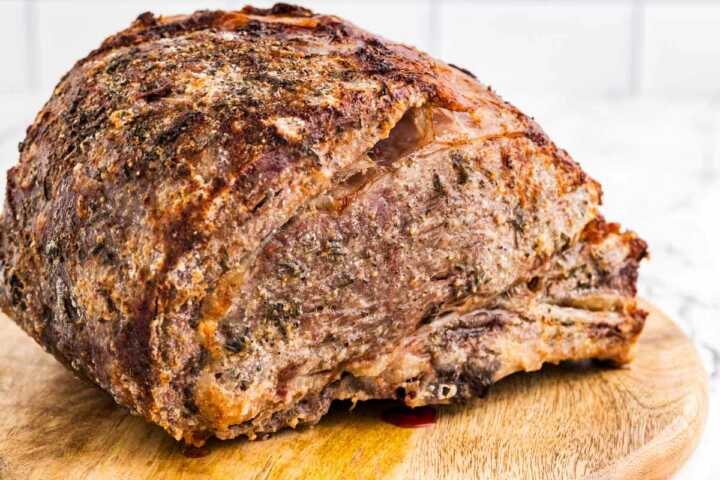
- High-temperature searing:Increase the oven temperature to 450-500°F.This step can produce smoke. Open windows, turn on exhaust fans, remove pets and kids from the kitchen and take precautions as needed. If excessive fat has collected in the roasting pan, transfer the roast to a clean pan to minimize smoking.Once the oven is fully preheated, return the roast to the oven and sear for 5 to 8 minutes, just until a deep brown crust forms. Watch closely and remove the roast as soon as it is deeply browned.
- Final rest and serving:Remove the roast from the oven and let it rest for a few minutes. Carve into slices and serve immediately.
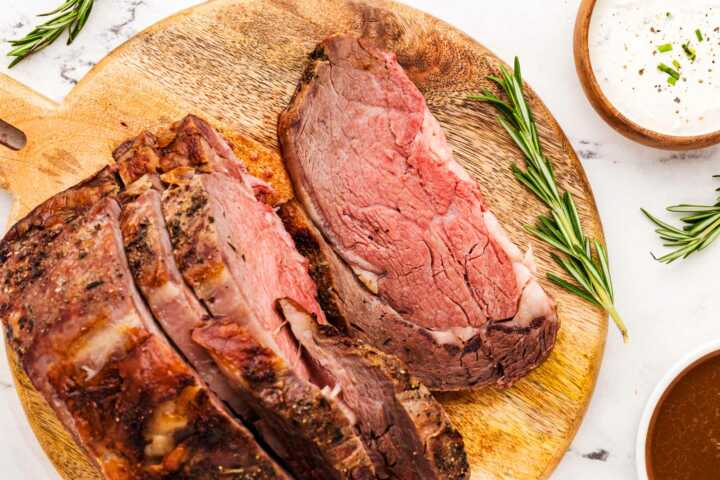
Reverse Sear Prime Rib
make your kitchen smell like home?Prime Rib Roast FAQs
Prime rib is traditionally served medium-rare, which is below USDA guidelines for beef roasts. If you prefer to follow USDA recommendations or are serving higher-risk guests, cook the roast to 145°F before pulling it from the low-temperature roast. Follow it with the rest per the recipe and skip the final high-heat sear.
For medium-rare, pull the roast from the low-temperature roast at 130°F. After resting and searing, it will finish around 135–140°F.
For reference:
Rare: 120-125°F pull
Medium-rare: 130°F pull
Medium: 135°F pull
USDA-minimum: 145°F pull + rest (no reverse sear)
Yes. This is non-negotiable. Prime rib is too expensive to cook by time alone. An instant-read or leave-in probe thermometer ensures perfect results.
Technically yes – but flavor and texture will suffer. Dry-salting in advance seasons the meat all the way through and helps create a better crust.
If you’re short on time, salt at least 4 hours ahead, uncovered in the fridge.
Traditional high-heat roasting often overcooks the outer layers before the center is done. Reverse searing cooks the meat gently first, then finishes with high heat for a crust – resulting in even doneness from edge to edge.
Yes, slightly. That’s why the initial pull temperature is lower than the final target temperature. Resting is accounted for in this method and is essential for juicy meat.
Butter adds richness and helps herbs adhere. The butter/herb crust tastes amazing, but it is optional. Prime rib has plenty of natural fat and flavor on its own. If using herbs, keep them minimal to avoid burning.
A heavy roasting pan or cast-iron pan works best for heat retention during the sear. A wire rack ensures even air circulation during the low roast.
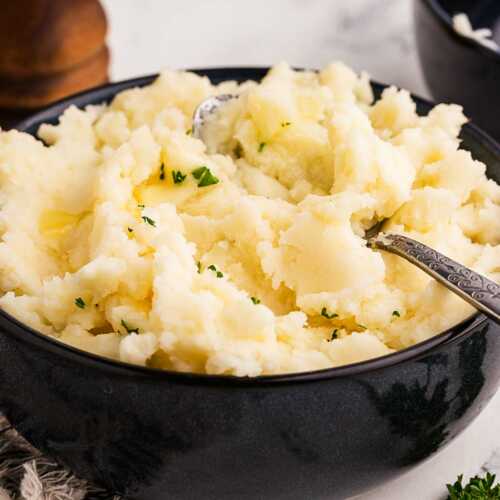
Perfect to serve with


More festive main dishes
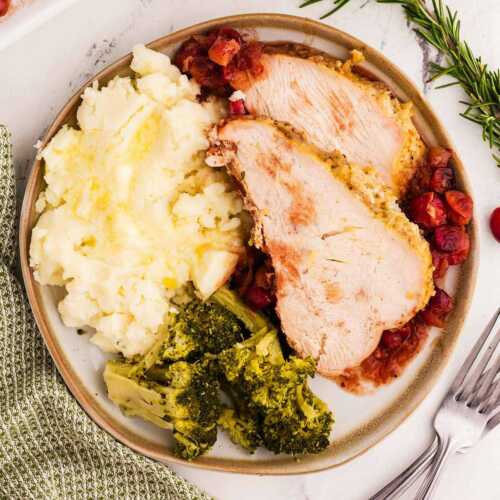
These festive main dishes are made for holidays at home – comforting, familiar, and worth gathering around the table for.
Browse all festive main dishes 〉
〈 swipe for more 〉
More recipes you may enjoy
〈 swipe for more 〉
Alan C says
This worked perfectly. I did 225 degrees for 4 hours on an almost 8 lb prime rib roast. It came out perfectly – pink to the edges and honestly the most tender prime rib I have had – better than most restaurants. Perfect holiday meal.